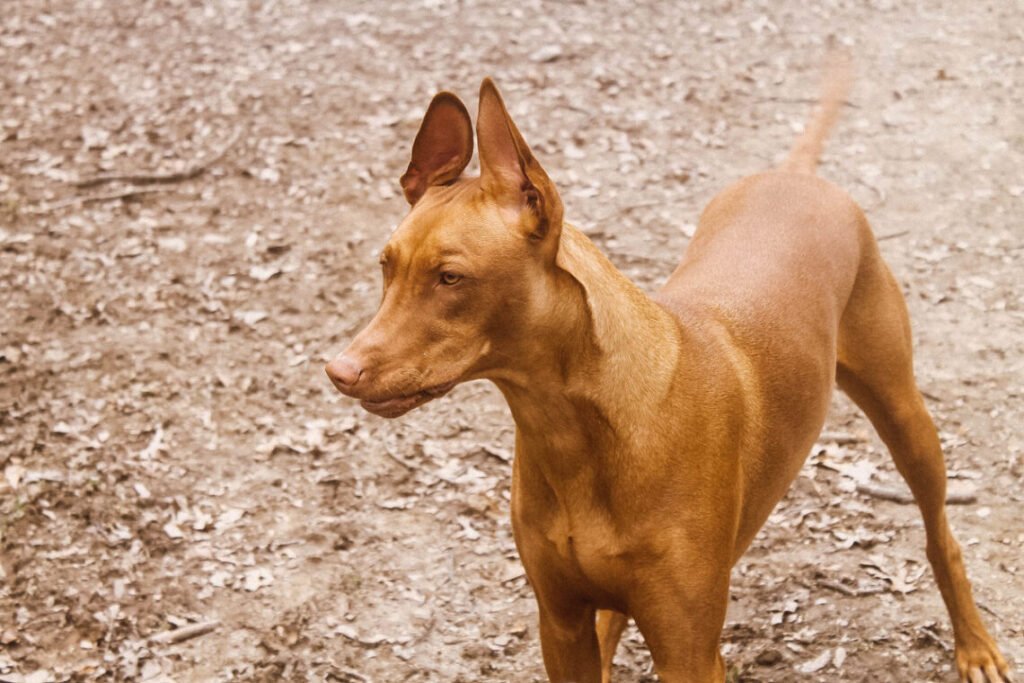

I already knew exactly what Freya was before I ordered the Embark kit. Pharaoh Hound, fully documented, purchased from a breeder with records going back several generations. The breed was never in question. What I wanted to know was everything else: genetic health risks, physical and behavioral traits mapped to her actual genes, and whether any surprises were hiding in her DNA that paperwork alone would not surface.
That framing matters because it changes what this test is actually for. If you have a mixed-breed dog and genuinely have no idea what you are working with, the breed results will probably be the headline finding. If you already know your dog’s breed, the health screening is where this test earns its price. Both are useful. They are just useful for different reasons, and I wanted to look at both.
For the mixed-breed side of this review, I pulled in results from Zola, the dog behind Good Girl Zola on Instagram, with her owner Emi’s help. Zola is a mix of American Pit Bull Terrier, Australian Cattle Dog, and what Embark calls Supermutt. Her results look very different from Freya’s, in exactly the ways you would expect and a few you might not.
This review covers testing with both a purebred dog (Freya, confirmed 100% Pharaoh Hound) and a mixed-breed dog (Zola, from Good Girl Zola). The results look very different depending on which situation you are in, and both are worth seeing.
The Embark Breed + Health DNA Test does more than tell you your dog’s breed mix—it screens for 270+ genetic health conditions and offers detailed insights into traits, ancestry, and even potential relatives. Results are clear, thorough, and backed by veterinary research. If you want more than a fun guess at your dog’s background (and actually useful health info), this test is one of the most comprehensive options out there.
What Is the Embark Breed & Health Kit?
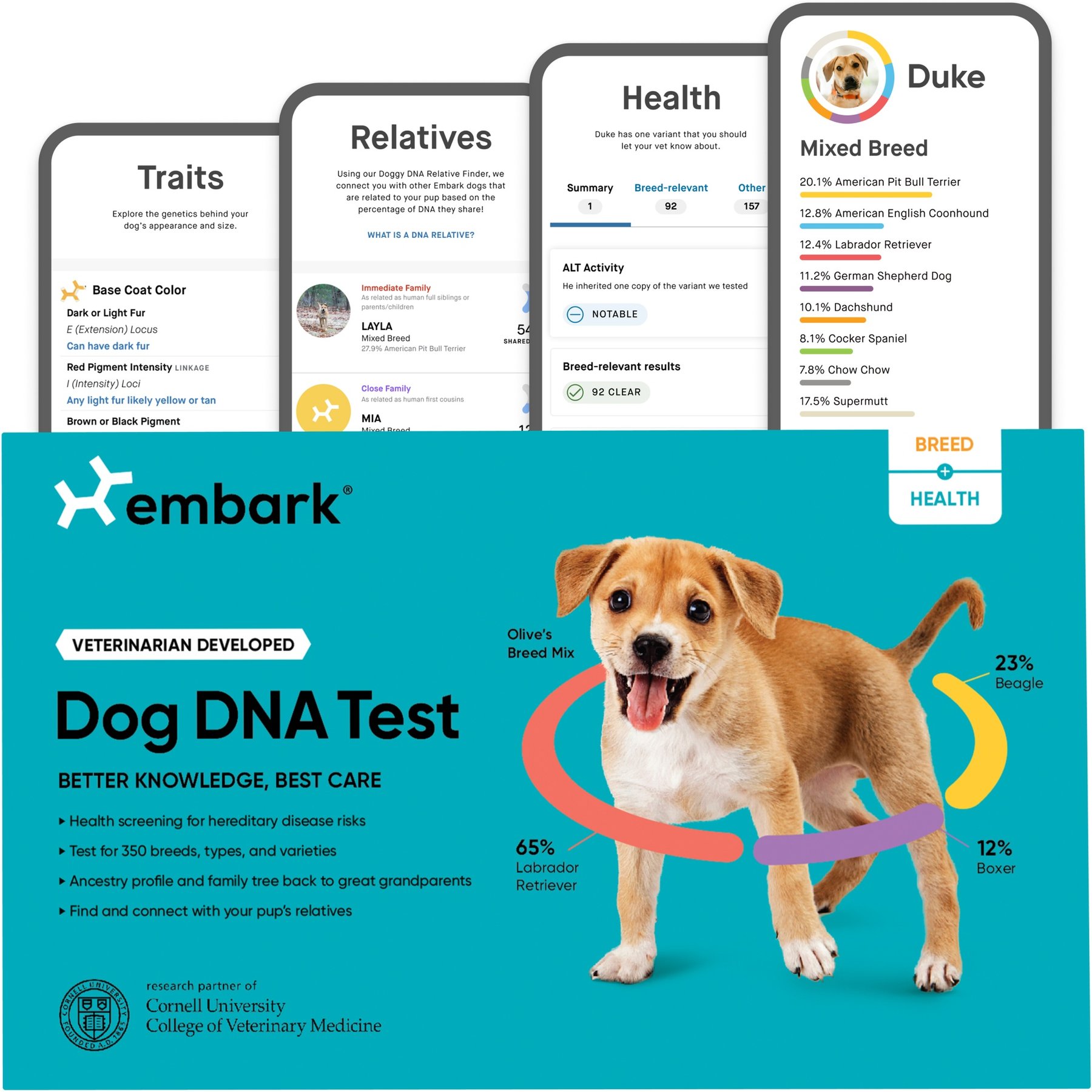
The Embark Breed and Health Kit is an at-home DNA test for dogs using a simple cheek swab. You register the kit online, collect the sample, mail it back in the prepaid packaging, and wait roughly two weeks for results delivered through an interactive online dashboard or the Embark app.
It is not just a breed test. The kit screens for more than 270 genetic health conditions, provides trait analysis tied to physical characteristics and behavioral tendencies, generates allergy and sensitivity insights, and connects your dog to potential relatives in Embark’s DNA database. A newer personality test feature adds an ongoing interactive layer on top of the one-time results.
The short version: this is a full genetic profile, not a party trick. The breed identification is one component of a much larger data set.
Embark Breed & Health Kit at a Glance
Breed Database | 400+ dog breeds including village dogs |
Health Screening | 270+ genetic conditions; results: not at risk, carrier, or at risk |
Trait Analysis | Coat type, body size, eye color, behavioral tendencies |
Allergy Insights | Environmental, food, and contact sensitivity likelihood |
Personality Test | Behavioral comparison against breed population norms |
Relative Finder | DNA matches to other dogs in Embark’s database with shared percentages |
Sample Method | Cheek swab; at-home; takes 1 to 2 minutes |
Turnaround Time | Approximately 2 weeks; progress updates sent during wait |
Results Format | Interactive online dashboard plus mobile app |
Account Required | Yes; free with kit; required to access results |
Getting Started: Swab, Send, Wait
The kit arrives with a cheek swab, a sample tube, clear instructions, and a prepaid return package. The swabbing process takes a minute or two. The only variable in the experience is your dog’s level of cooperation with having a swab rubbed along the inside of their cheek. Freya treated it as somewhere between mildly undignified and an opportunity to chew something. Either way, it got done.
Once the sample is in the mail, you register the kit online and that is where the waiting begins. Embark keeps you updated during the process rather than going silent until results drop, which matters more than it sounds when you are genuinely curious. Results arrived for Freya in right around two weeks.

Pro Tips
Register your kit online as soon as it arrives, before you even do the swab. That way the sample is linked to your account the moment it arrives at the lab and the process starts immediately. You do not have to wait until after you collect the sample to set up the account.
What the Results Actually Look Like
Breed Identification
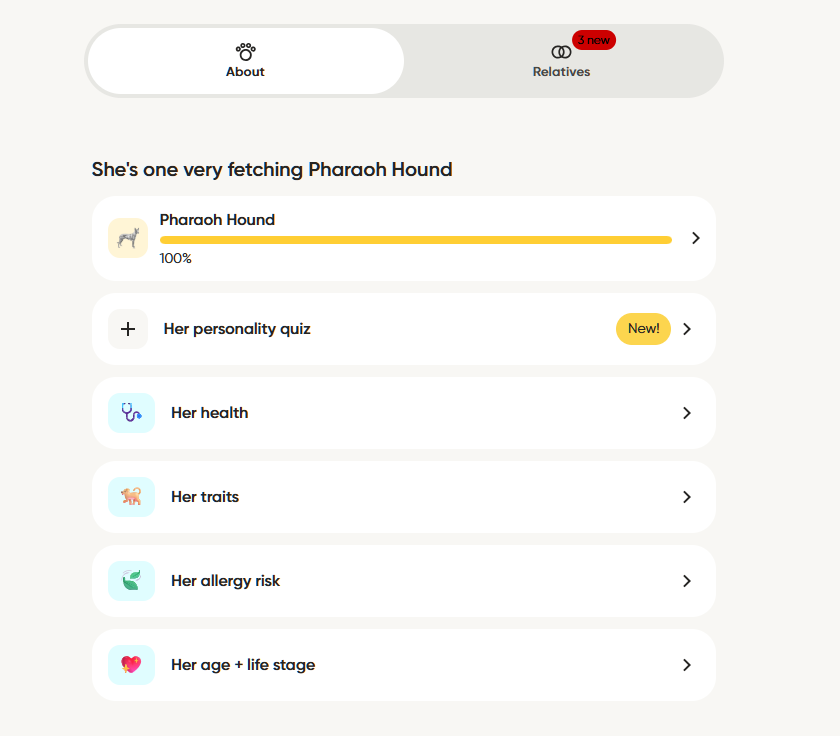
Freya came back exactly as expected: 100% Pharaoh Hound. No surprises, no mystery percentages, no distant relative breeds lurking in the background. As a purebred from well-documented lines, this was the least interesting part of her results for me personally. That said, I want to be clear that “confirmation” is still useful. Even with strong breeder documentation, there is a small part of every dog owner’s brain that wonders. Freya’s results closed that loop.
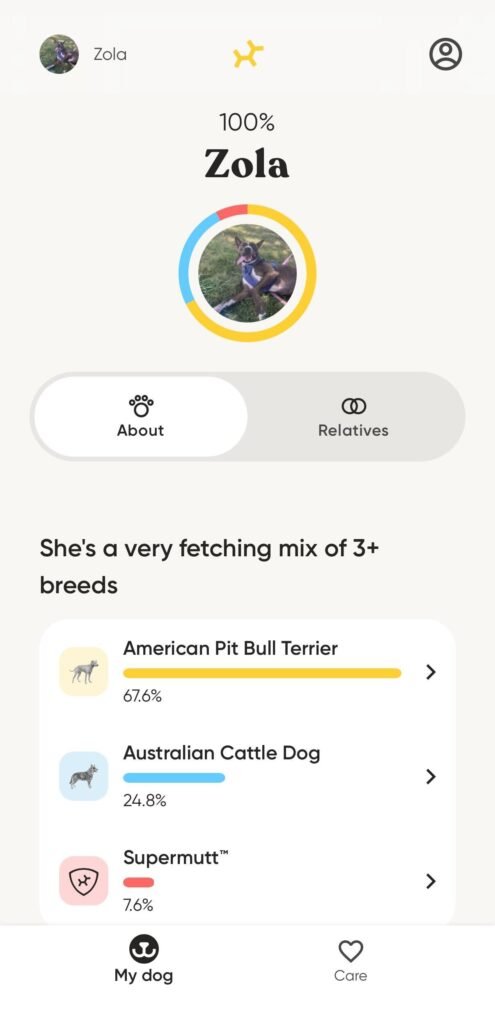
For Zola, the breed breakdown was a completely different experience. Embark identified her as American Pit Bull Terrier, Australian Cattle Dog, and a category called Supermutt. That last one is worth explaining, because it sounds more mysterious than it is.
Supermutt means the remaining portion of Zola’s DNA comes from multiple distant ancestors that are too interwoven to assign confidently to a single breed. It is not a gap in the test. It is an honest representation of genuinely complex genetic history. For dogs who have been mixing breeds across multiple generations, this is exactly what the data looks like at the bottom of the tree.
Pro Tips
If you have a purebred, do not skip this test just because breed identification is not your question. The breed section is a single tab. The health, traits, allergy, and relative sections are where the time goes, and none of those require any uncertainty about breed to be valuable.

Breed Overviews
Clicking through to the breed profile for each result brings up an overview of the breed’s characteristics, typical traits, common health considerations, and behavioral tendencies. For well-documented breeds, these are genuinely detailed.
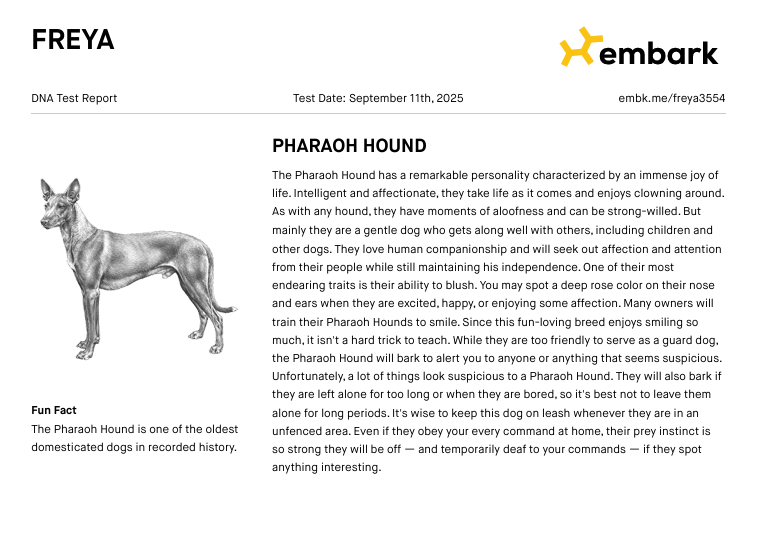
Embark’s Pharaoh Hound profile was accurate across the board. One thing they get exactly right: the prey instinct and the strong recommendation to keep them on leash in unfenced areas. 10000% correct on that one. They also note that while Pharaoh Hounds are too friendly to be effective guard dogs, they will bark at anything that looks suspicious, and according to the profile, a lot of things look suspicious to a Pharaoh Hound.
That is the most accurate sentence I have ever read about this breed. Freya barks at squirrels, at the cat when she has opinions about the cat’s life choices, at boredom, at hunger, at the concept of a Tuesday. The profile nailed it.
Allergy and Sensitivity Insights
This is one of the features I expected to be interesting and found to be more useful than anticipated. The allergy section provides genetic likelihood scores for environmental, food, and contact sensitivities. It is not a diagnostic tool and I would not treat it as one, but it gives you a starting point when you are trying to figure out why your dog is suddenly itchy or reacting to something and you have no obvious culprit.
Anyone who has gone down that particular rabbit hole knows how much time it takes. Having genetic context does not solve the mystery on its own, but it narrows the search.
Freya came back below average across all three sensitivity categories. Her environmental allergy risk scored at 4.8%, which is genuinely low. She does have mild seasonal allergies in real life, so low is not zero, but the magnitude is accurate. The one thing she has ever had a serious reaction to is cicada killer wasp stings. That is specific enough that I would not expect any DNA test to surface it, and Embark did not. Some things are just Freya.
Traits and Physical Characteristics
The traits section is part genetic science, part satisfying confirmation of things you already knew but never had a name for. Embark looks at genes linked to coat type and shedding, body size and structure, eye color, and some behavioral tendencies. For mixed-breed dogs, this section can explain physical characteristics that otherwise feel random.
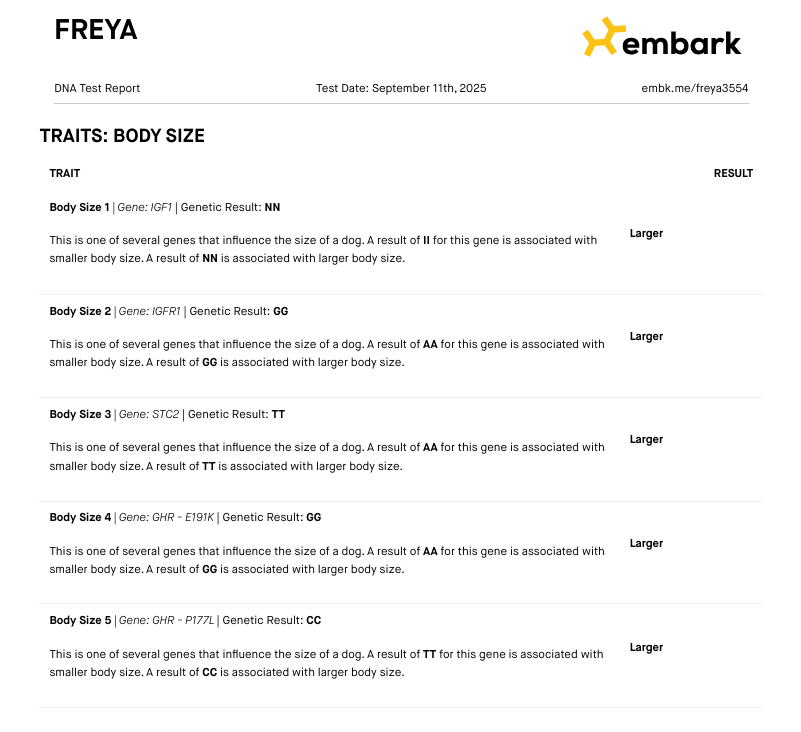
For Freya, most of it confirmed what is already obvious: long legs, lean athletic build, the physical profile of a dog that was built to run for a long time across variable terrain. One finding I did not expect: Freya is genetically predisposed toward a larger body size than the average Pharaoh Hound. She has always been on the taller and longer end of the breed standard, and apparently that is in the DNA and not just how she grew.
Personality Test and Personalized Games
Fair warning: this section of the results is easy to underestimate and then spend significantly longer in than planned.
The personality test is a feature I discovered the second time I logged into Freya’s dashboard, not the first. Embark added it after my initial results came in, which is a good example of how the platform continues adding value after you have already paid for the kit. You answer a series of questions about your dog’s actual behavior, and the results compare your answers to others in the same breed population.
Freya’s results confirmed that she marches solidly to her own beat. She fell in line with typical Pharaoh Hound behavior in most categories, but two traits stood out as departures from the breed norm: she is significantly more eager for attention and approval than typical for the breed (she is very much a look-at-me, pick-me type of dog), and she is more scent-driven than you would expect from a sighthound. Pharaoh Hounds are primarily visual hunters. Freya is also that, but she will absolutely follow a scent trail with the kind of focus that seems borrowed from a completely different dog.
The personalized games feature lives in the Care tab and works from a separate short quiz. Based on the answers, Embark builds a play plan for your specific dog. Freya’s recommendations included bathing desensitization, which appeared because I mentioned she has strong feelings about baths (specifically, that they should not happen). The fact that the recommendations are actually tailored to what you tell them rather than just generic breed suggestions made it feel worth the few minutes the quiz takes.
Relative Finder
This one is the feature you think will be a novelty and then find yourself genuinely invested in.
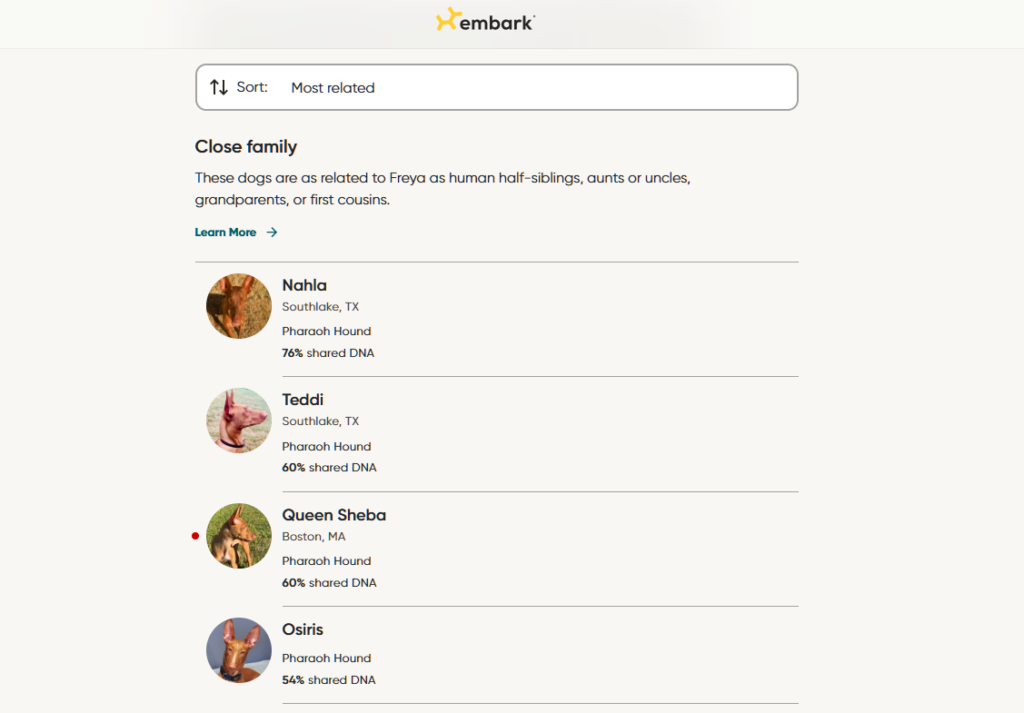
Embark compares your dog’s DNA to others in their database and surfaces close matches with shared DNA percentages and locations. For Freya as a purebred, the relative matches carry real information about lineage beyond what the breeder paperwork shows. For mixed-breed dogs, the results are a different kind of discovery entirely.
Zola’s relative finder results led to something I found genuinely touching: her owner Emi used the matches to connect with Zola’s actual siblings, and they arranged a meetup. That is the kind of outcome that is hard to put a number on. The relative finder starts as a database feature and occasionally turns into something much better.
Frequently Asked Questions
Is the Embark Breed & Health Kit worth it for a purebred dog?
Yes, but not for the reason most people assume. Breed identification is the least interesting part of the results if you already know what your dog is. The value for purebred owners is in the health screening: 270+ genetic conditions tested, with clear outcomes for each. Getting a clean genetic baseline for a dog you plan to have for 10 to 15 years is worth considerably more than confirming what you already knew about the breed.
How long does the process take from kit to results?
Roughly two weeks from the time the sample arrives at the lab. Embark sends progress updates during the wait, so you are not just checking your email repeatedly hoping something changed. The actual swab collection takes one to two minutes at home.
What does “Supermutt” mean in the results?
Supermutt is Embark’s term for a portion of a dog’s DNA that comes from multiple distant ancestors mixed across too many generations to assign confidently to any single breed. It is not a test failure or a gap in coverage. It is an honest representation of complex genetic history, common in dogs with diverse multi-generational backgrounds. It usually means your dog has a long and interesting family tree.
Can the allergy and sensitivity results replace a vet diagnosis?
No, and Embark does not claim they can. The allergy insights are genetic likelihood scores, not diagnostic results. They give you a starting point and some context when you are trying to figure out why your dog is reacting to something, but a vet visit is still the appropriate path for any actual allergy investigation or treatment plan.
What is the difference between the Breed & Health Kit and the cheaper breed-only option?
The breed-only kit gives you breed identification and ancestry breakdown without the health screening. If all you want is to know what your dog is, the lower-cost option covers that. If you want the genetic health data, trait analysis, allergy insights, relative finder, and the full interactive dashboard experience, the Breed and Health Kit is the right version.
Does the account requirement mean my dog’s data is shared with others?
No. The account is required to access and view results, not to make the data public. It is free with the kit and takes a couple of minutes to set up. The relative finder feature does let other Embark users see that a match exists and where the dog is located, but only in the context of the DNA matching function, which you can opt out of.
Is the personality test scientifically rigorous?
It is genuinely fun and often accurate in ways that feel almost uncanny, but it is worth being clear that it is based on owner-reported behavior and breed population comparisons rather than purely genetic data. Some of the behavioral traits in the broader results are genetically grounded. The personality quiz specifically is more reflective and comparative than it is genetic science. Both are interesting. Just worth knowing which is which.
How does the relative finder actually work?
Embark compares your dog’s DNA against all other dogs in their database and surfaces matches with shared genetic material, along with the percentage of DNA shared and the general location of the matched dog. Close matches (siblings, half-siblings, cousins) show higher shared percentages. For purebreds, this can reveal lineage connections beyond what breeder records show. For mixed breeds, it often surfaces actual siblings or relatives that ended up in different homes.
Final Verdict: Is the Embark Breed & Health Kit Worth It?
Yes, with one important clarification: it is worth it if health screening is part of what you are after. If you only want to know what breeds your dog is made of, there are cheaper options including Embark’s own breed-only kit, and spending up for this version is not necessary.
But if you want to know what is going on inside your dog genetically, what health risks are in the picture, what their physical traits are actually connected to, and whether there are relatives out there you have not met yet, the Breed and Health Kit is doing something that a basic breed test simply is not. It is a different category of product.
I went in expecting breed confirmation and left with a genetic profile, a clean health baseline, a personality read that was uncomfortably accurate, and a personalized play plan that correctly identified that Freya and baths have an unresolved conflict. That is a lot of information from a cheek swab and two weeks of waiting. For what it costs, the depth of what comes back makes the Embark Breed and Health Kit genuinely easy to recommend.