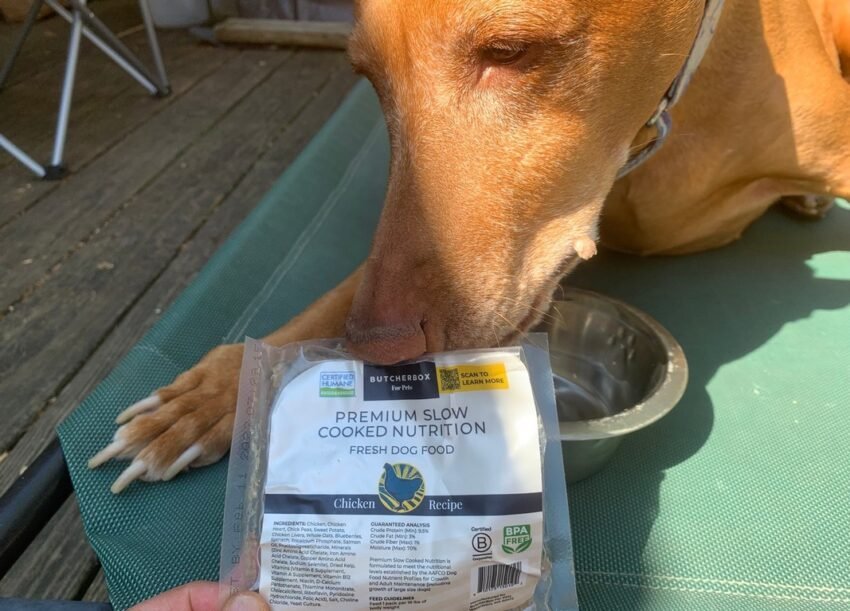

The team behind ButcherBox had already earned my attention before they launched DASH Dog Food (formerly ButcherBox For Pets). I have been familiar with the human side of that brand for a while, and the reputation there is built on one specific thing: the quality of the meat. Not “quality” as marketing language. Actual sourced, antibiotic-free, certified humane protein. When a founder carries those sourcing standards into a pet food line, the real question is whether they carry them over completely or dilute them for the pet market. With DASH Dog Food, they carried them over.
Freya is my test subject for all dog food reviews, and she is not an easy one. She is picky by nature and she has a genuinely inconsistent relationship with beef specifically. Some beef formulas she handles without issue. Others cause problems on day one. Others she does fine with for a few days and then her stomach decides otherwise. I have never fully figured out the pattern, which makes testing a new beef-based fresh food genuinely useful rather than just another palatability observation. She ate both the beef and chicken recipes, kept eating them and did not give me any digestive surprises. For Freya and beef, that is notable.
The short version: DASH Dog Food delivers on the brand’s quality promise in a way that is specific and verifiable rather than well-packaged. The organ meat inclusion is the part I want to spend the most time on, because it is where this food is doing something most fresh dog foods do not actually do well.
Editor Note: Trusted Pet Review may earn a commission on qualifying purchases made through links in this post, at no extra cost to you. We only recommend products we’d genuinely consider for our own pets.
The first order discount is real, but the regular price is the number that matters long-term. This review includes a side-by-side cost comparison with making similar food at home. The result is less obvious than you might expect.
A sous-vide style fresh dog food where antibiotic-free, certified humane meat makes up over 50% of the recipe. Fortified with whole food ingredients for premium nutrition and enhanced with pre- and post-biotics to ensure healthy digestion.
GUARANTEED BEST PRICE
SAVE 50% OFF YOUR FIRST ORDER
What DASH Dog Food Actually Is
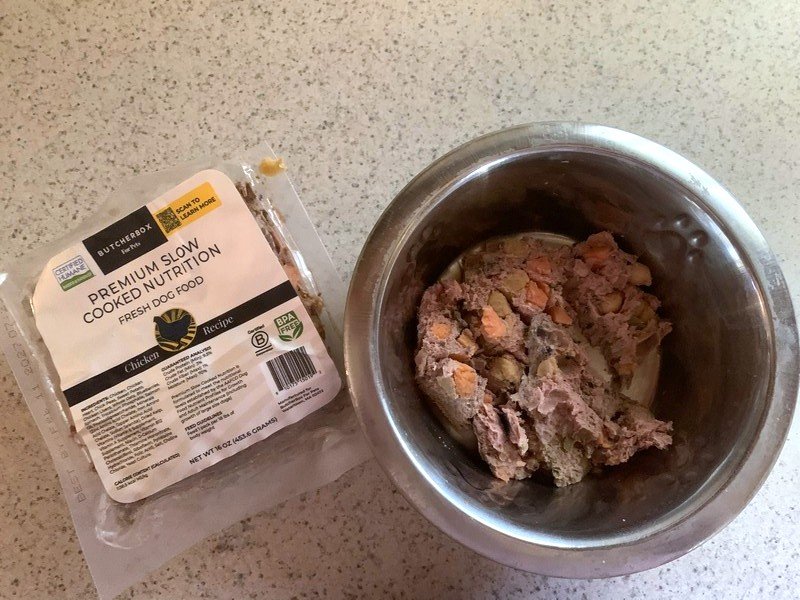
DASH Dog Food is a fresh-style dog food cooked at lower temperatures rather than the high-heat processing used in conventional kibble. The slow-cooking approach (closer to sous-vide than traditional cooking) is designed to preserve nutrients that high heat degrades and keep proteins in a more digestible form. The result looks and smells like actual cooked food because the process treats it like actual cooked food.
The protein structure is what sets this product apart from most fresh food alternatives. Meat makes up over 50 percent of each recipe, and it is not just ground muscle meat padded out with starches. The formulas include organ meats (specifically heart and liver) alongside real beef or chicken cuts. That distinction matters more than it sounds on a label. Organ meats are among the most nutrient-dense foods available, naturally rich in vitamin A, iron and essential amino acids. Most dog foods meet protein requirements by weight while relying on muscle meat or plant protein sources. Including organ meats changes what the food actually delivers nutritionally, not just what the guaranteed analysis says it contains.
FYI: “Human-grade” is a specific regulatory term, not a general quality claim. It means both the ingredients and the production facility meet the standards required for human food manufacturing. The DASH Dog Food team built the brand on the same sourcing standards that made ButcherBox a trusted name in human fresh food delivery. The pet food line applies the same sourcing: antibiotic-free, certified humane meat. That accountability is clearer here than on brands where the quality claim has no external reference point.
DASH Dog Food at a Glance
Type | Fresh, slow-cooked dog food; subscription delivery |
Best For | Picky eaters, sensitive stomachs, owners who want verified protein quality |
Proteins | Beef (with heart and liver) and Chicken; recipes sold separately |
Cooking Method | Low-temperature slow-cooking (sous-vide style) |
Meat Content | Over 50% of each recipe |
Sourcing Standard | Antibiotic-free, certified humane; sourcing standards carried over from the ButcherBox team’s human food operations |
Digestive Support | Pre- and post-biotics included in the formula |
Storage | Refrigerate after opening; not shelf-stable |
Main Concern | Higher price than kibble; limited to beef and chicken (no novel protein options currently) |
How It Works
Why Slow-Cooking Matters
Most commercial dog food is processed at high temperatures. Extrusion for kibble and standard cooking for canned food both extend shelf life and kill pathogens, but they also degrade heat-sensitive nutrients including certain vitamins, amino acids and enzymes. The industry compensates by adding nutrients back in supplement form after processing, which is why the ingredient list on a bag of kibble ends with a long list of added vitamins and minerals.
Slow-cooking at lower temperatures preserves more of what the ingredients contain naturally. The proteins remain in a form that is easier to digest, which matters particularly for dogs with sensitive digestive systems or those that do not absorb high-heat-processed protein efficiently. This is not a marginal difference. Dogs that struggle with conventional food (loose stool, low energy after meals, inconsistent digestion) often respond differently to gently cooked protein because the digestive workload is lower.
The Organ Meat Case
The distinction between muscle meat and organ meat is worth explaining because it is where this food is doing something most competitors do not do well. Muscle meat provides high-quality protein, but organ meats are among the most nutritionally dense foods available. Liver is one of the richest natural sources of vitamin A, B vitamins and iron. Heart is dense in taurine, which is critical for cardiac health in dogs, along with CoQ10 and additional B vitamins. These nutrients occur naturally in organ tissue at concentrations that muscle meat does not contain.
Most dog foods meet protein requirements on paper. Organ meats are not required to do that. They are included here because they change what the food delivers beyond the protein number. That is the point of including them, and it is why the distinction matters when comparing this food to other fresh formulas that lead with muscle meat and list organs as a minor ingredient or not at all.
Ingredients
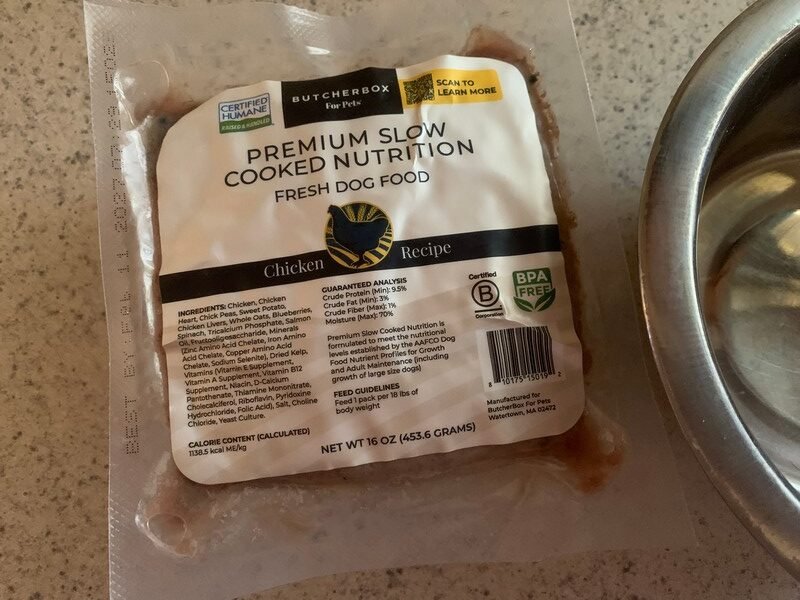
The ingredient list looks long at first read. Most of the length is the vitamin and mineral supplement blend at the end, which is standard in any AAFCO-complete formula. The part that matters is what comes first.
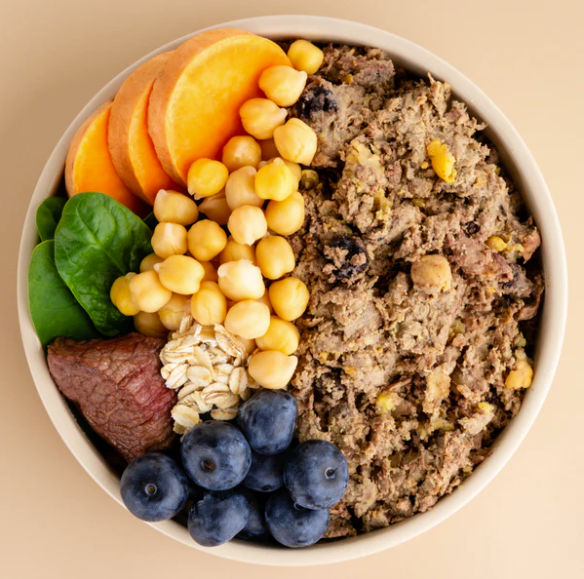
Real beef anchors the beef recipe, followed by organ meats (heart and liver). Sweet potato, chickpeas and oats provide the carbohydrate base. Salmon oil and sunflower oil supply essential fatty acids. Blueberries, spinach and kelp round out the whole-food additions. Pre- and post-biotics are included for digestive support. No artificial preservatives, no dyes and no ingredients that send you to a search engine.
The carbohydrate selection is worth noting. Sweet potato, chickpeas and oats are recognizable, digestible whole-food sources rather than filler-grade starches. Each one is present because it contributes something to the formula, not because it adds bulk cheaply.

Pro Tip
If your dog has previously reacted to beef-based formulas, introduce the beef recipe gradually over ten to fourteen days rather than switching immediately. Some dogs that react to conventional beef (often due to processing methods, added ingredients or heavily rendered fat rather than beef itself) tolerate clean, minimally-processed beef differently. The gradual introduction gives you useful information about whether the issue was the ingredient or the way it was handled.

Palatability
Freya’s relationship with beef is complicated. Not in the straightforward way where she refuses it, but in the less predictable way: some beef formulas she handles without any issue, others cause digestive problems from day one and some she tolerates for a few days before her stomach decides otherwise. I have never fully identified the pattern, which makes her a genuinely useful (if occasionally inconvenient) test subject for a beef-based fresh food.
She ate both recipes. The chicken recipe got the enthusiastic and immediate response I expect from chicken with Freya. The beef recipe got the same response, which was not what I was expecting, and she had no digestive issues across the full testing period. No problems on day one, no problems on day five, no problems at any point in between.
She has been beyond picky lately in general, the kind of pickiness where several consecutive food introductions have been met with varying degrees of refusal or reluctant eating. That context makes eating both new recipes without hesitation more meaningful than it would be on a normal-appetite week.
The Cost: What It Actually Works Out To
Let me be honest about the pricing because the first-order discount can make this harder to evaluate than it should be. The promotional rate is real, but the regular price is the number that matters for whether this fits into a household long-term.
At regular pricing, Freya’s portion works out to approximately $8.62 per pound for 8 pounds of food. That is meaningfully more expensive than conventional kibble. It is not meaningfully more expensive than making comparable food at home, which is the more relevant comparison for anyone seriously considering a fresh food diet.
I ran a comparison using standard grocery store prices for a few of the main ingredients. Organic ground beef runs around $10.99 per pound (with cheaper options starting around $6), sweet potatoes approximately $1.29 per pound, chickpeas around $1.49 for 15.5 ounces and blueberries around $4 per pint on sale. Those four ingredients alone already exceed the per-pound cost before factoring in the organ meats, supplements to round out the nutritional profile, preparation time and energy costs. The homemade route costs more, not less.
That matters because the decision for most owners is not “this versus kibble.” It is “this versus whatever I am already feeding.” If the current diet is high-quality kibble and the budget allows for an upgrade, the premium is justified by what the food actually delivers. If the appeal is fresh food ingredients without the preparation overhead, the cost case is straightforward.
What to Consider
The recipe variety is currently limited to beef and chicken. That covers most dogs, but it means DASH Dog Food is not the right option for dogs with sensitivities to both proteins. There are no novel protein alternatives currently available, which is a genuine gap for owners managing dogs with more restrictive dietary needs.
Refrigeration is required after opening and the product is not shelf-stable. That is standard for fresh dog food but worth knowing before the first delivery arrives. Make sure the storage routine is in place and that refrigerator space is accounted for.
The subscription model is the only way to purchase, which means delivery timing matters practically. Unlike retail availability, there is no fallback if a shipment is delayed or a delivery window is missed. Factor that into the decision alongside the cost and storage considerations.

Who This Is Best For
- Dogs with sensitive stomachs who have struggled with conventional food. The gentle cooking method and clean ingredient list reduce the common irritants in heavily processed diets. Dogs that react to beef in other formats may respond differently here, though the gradual transition approach is still recommended for the first introduction.
- Owners who want verifiable protein quality. “Human-grade” and “high-quality” appear on dozens of pet food labels. The sourcing standard here is backed by the same supplier relationships and standards the team built over a decade at ButcherBox. The accountability is clearer than on brands where the quality claim has no external reference point.
- Picky eaters. Both recipes passed the Freya test during a particularly selective stretch. For owners dealing with dogs that have strong opinions about what they will tolerate, that is a relevant data point.
- Owners comparing fresh food to homemade feeding. The cost comparison makes this option surprisingly competitive once the full cost of home preparation is calculated honestly. If the appeal is ingredient quality and digestibility without the preparation overhead, the value case is straightforward.
The case is harder for dogs with sensitivities to both beef and chicken (no alternative proteins currently), households where the fresh food price tier is a genuine budget stretch and owners specifically looking for a wide recipe variety. In those situations a high-quality conventional fresh food with more protein options or a premium kibble is the more practical starting point.
- Protein quality matches the brand standard Antibiotic-free, certified humane sourcing tied to a brand whose human product line already carries that reputation. Not a self-contained quality claim.
- Organ meats included and doing real work Heart and liver alongside muscle cuts. That is where the naturally occurring vitamin A, taurine, iron and B vitamins come from. Most formulas skip this or list it in trace amounts.
- Meat makes up over 50% of each recipe Not padded out with starches or plant protein to reach a number on a guaranteed analysis.
- Slow-cooking preserves nutrients and digestibility Low-temperature cooking keeps proteins easier to digest and retains heat-sensitive nutrients that high-heat processing degrades.
- No artificial preservatives, dyes or mystery ingredients The label is readable without a reference guide.
- Pre- and post-biotics included Digestive support built into the formula rather than added as a separate supplement.
- Competitive against homemade cost More expensive than kibble, but less expensive than assembling comparable ingredients at home once preparation overhead is factored in honestly.
- Higher price than conventional kibble The premium is real. Worth calculating the ongoing cost at your dog's weight before subscribing.
- Limited recipe variety Currently beef and chicken only. No novel protein alternatives for dogs with sensitivities to both proteins.
- Requires refrigeration after opening Not shelf-stable. Factor storage space and feeding routine into the decision before the first delivery.
- Subscription and delivery only Not available in retail. No backup option if a delivery is delayed or a shipment is missed.
Frequently Asked Questions
What is slow-cooked or sous-vide style dog food and how is it different from standard fresh dog food?
Slow-cooking refers to preparing food at lower temperatures for longer periods rather than the high-heat, short-duration cooking used in conventional pet food processing. Sous-vide style cooking specifically involves sealing food in packaging and cooking it at a precisely controlled low temperature, which preserves nutrients and moisture while ensuring food safety. Standard fresh dog food brands use varying cooking methods; not all of them use low-temperature approaches, which affects how much nutritional content survives the cooking process.
Why do organ meats matter in a dog food formula when muscle meat already meets protein requirements?
Protein requirements in pet food are measured by quantity, not by the specific nutrients different protein sources provide. Muscle meat meets the protein target but does not deliver the concentration of fat-soluble vitamins, B vitamins, taurine and trace minerals that organ meats contain naturally. Liver is one of the richest natural sources of vitamin A, iron and B12. Heart provides significant taurine, which is essential for cardiac function in dogs. Including organ meats in a formula changes the nutritional profile of what the food delivers, not just whether it passes the guaranteed analysis.
Is fresh slow-cooked dog food nutritionally complete for long-term feeding?
Fresh and gently cooked dog food can be nutritionally complete for long-term feeding when formulated to meet AAFCO standards. Look for an AAFCO statement of nutritional adequacy on any fresh food before using it as a primary diet. That statement means the formula provides all required nutrients at appropriate levels, either through ingredient content alone or through a combination of whole-food ingredients and added supplements.
How does fresh dog food pricing compare to making similar food at home?
Homemade dog food costs more than most owners expect once ingredients, supplements and preparation overhead are calculated honestly. The protein sources, whole-food carbohydrates and organ meats in a nutritionally complete recipe add up quickly at retail grocery prices, and that is before factoring in the supplemental vitamins and minerals required to balance a homemade diet properly. Fresh dog food subscriptions are consistently more expensive than kibble but often less expensive than comparable homemade diets when the full cost is calculated.
What does “certified humane” mean in the context of pet food?
“Certified Humane” is a third-party certification program that verifies specific animal welfare standards throughout the raising and handling process. Certified farms must provide animals with sufficient space, shelter, resting areas and the ability to engage in natural behaviors. The certification is independent, which means it cannot be self-awarded. When a pet food uses certified humane meat, it means the animal welfare standards have been externally verified rather than claimed without accountability.
Do dogs with sensitive stomachs do better on fresh or gently cooked food than on kibble?
Many dogs with sensitive stomachs tolerate fresh or gently cooked food better than conventional kibble, though the reason varies by individual dog. Kibble processing at high temperatures alters protein structure in ways that can make it harder for some dogs to digest efficiently. Fresh food with clean ingredients and no artificial additives also eliminates common irritants that appear in many conventional formulas. That said, a sensitive stomach can react to any new food during an abrupt transition. Gradual introduction over seven to ten days reduces the likelihood of digestive upset regardless of the food quality.
How should I store fresh dog food after opening and how long does it stay good?
Most fresh dog food should be refrigerated after opening and used within five to seven days. Check the packaging for the specific guidance from the manufacturer, as timelines vary by formula and packaging method. Portions that will not be used within the refrigeration window can typically be refrozen before the original thaw period expires, though repeated freeze-thaw cycles affect texture and can reduce palatability over time. Plan portion sizes and thaw schedules ahead of delivery to minimize waste.
Final Verdict
DASH Dog Food does what the brand’s quality promise suggested it would. The protein quality is real, the organ meat inclusion is genuinely useful rather than cosmetic and the slow-cooking method produces food that is digestible in a way that high-heat-processed alternatives are not.
Freya’s inconsistency with beef is the clearest practical test I can run on a beef-based fresh food. She ate both recipes through a full testing period without digestive incident, during a stretch when she had been turning down other foods without much reason. For a dog whose stomach has opinions about beef that change without warning, that is the relevant verdict.
The honest limitation is variety. Two proteins is not a wide lineup, and owners who need novel protein options will need to look elsewhere for now. For everyone else, the protein sourcing standard and the organ meat depth make this one of the more straightforward value cases in the fresh food category.
If ingredient quality and digestibility are the priority and the price fits the household, there is not much to talk yourself out of here.
A sous-vide style fresh dog food where antibiotic-free, certified humane meat makes up over 50% of the recipe. Fortified with whole food ingredients for premium nutrition and enhanced with pre- and post-biotics to ensure healthy digestion.
GUARANTEED BEST PRICE
SAVE 50% OFF YOUR FIRST ORDER