
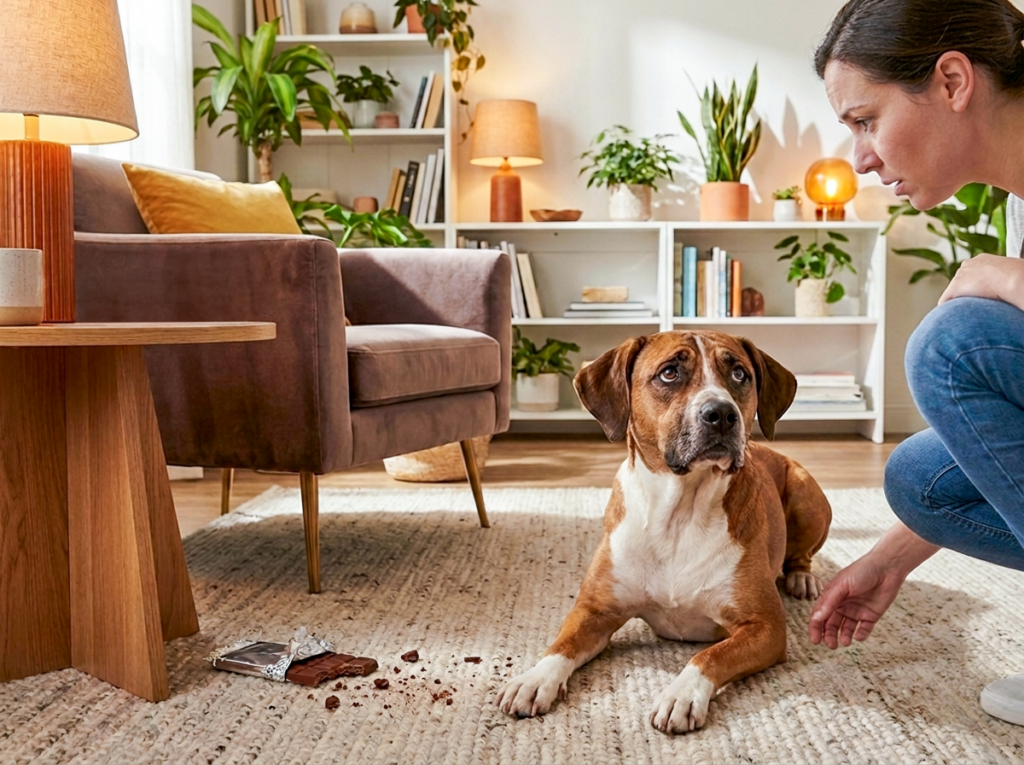

It usually starts with a sound. The crinkle of a wrapper that was supposed to be out of reach. A chewed leaf on the floor that was whole an hour ago. That half-second where your stomach drops and your brain goes: wait, is that bad?
That gap, the one between “probably nothing” and “call someone right now,” is exactly where this checker lives. Pick dog or cat, tap what they got into, and in about a minute you will know whether you are looking at a true emergency, a call-to-be-safe, or something to watch at home. No scrolling through forty browser tabs while the dog gives you a guilty look.
Here is the part worth saying out loud first: this is a guide, not a diagnosis. If your pet already looks wrong, throwing up, wobbly, struggling to breathe, just not themselves, skip the quiz and call. The tool is built for the uncertain middle, not the obvious emergency. When in doubt, the cautious choice is always the right one.
Editor’s Note: Trusted Pet Review may earn a commission on qualifying purchases made through links in this post, at no extra cost to you. We only recommend products we’d genuinely consider for our own pets.
Most pet poisonings come down to one question: how fast do you need to move? This page, and the checker below, answers that in under a minute.
What Actually Counts as a Pet Poison
The tricky part with pet poisons is that most of them do not look like poison.
The genuinely scary stuff is usually sitting in plain sight: a lily on the counter, a stick of sugar-free gum, a handful of grapes, the sweet little antifreeze drip on the garage floor. Nothing about any of it reads as dangerous. That is what makes it dangerous.
The list is not the same for both pets, either. What lands a dog at the emergency vet is not always what lands a cat there, which is why the tool asks the species first.
Cats, the short list of true emergencies:
- Lilies of any kind, even the pollen or the vase water
- Tylenol and other acetaminophen products
- Antifreeze and rodent poison
- Dog flea products (permethrin is deadly to cats)
Dogs, the ones people underestimate:
- Xylitol in sugar-free gum, mints and some peanut butters
- Grapes and raisins, including the ones baked into things
- Wild mushrooms from the yard or a walk
- Rat and mouse bait
You do not need to memorize either list. That is the tool’s job.
START HERE: 60-Second Cat and Dog Toxin Checker
Pick your pet and what they ate, and you'll know whether this is an emergency, a call-to-be-safe, or something to watch at home. When you're unsure, always choose the more cautious step. This tool is a guide, not a diagnosis.
Is it a dog or a cat?
What did your pet eat?
What they ate, roughly how much, when it happened, and your pet's weight. If there is a package or a piece of the plant, keep it nearby.
This tool is a guide, not medical advice. It cannot account for the exact amount your pet ate or their full health picture. When you are unsure, always call a poison line or your vet, and treat any emergency sign as urgent.
How to Read What the Tool Tells You
The checker sorts every answer into one of three buckets, and the color is the whole message.
Go now (red)
Red is not a maybe. It means the clock matters and damage can start before symptoms do. Head for the nearest emergency vet and call a poison line on the way. Do not wait to “see how they do,” because for these items, waiting is the mistake.
Call to be safe (amber)
Amber is the probably-fine-but-do-not-guess lane. The danger depends on the dose and your pet’s size, which is real math that a human on the phone can do in seconds and you cannot do from the couch. A two-minute call beats a long night of worrying.
Usually low risk (navy)
Navy is permission to breathe. The item is generally not toxic in a small amount, though you still want to watch for an upset stomach over the next day. If anything changes, you already know the next step.
Whatever color you land on, the tool ends with the same smart prompt: have four things ready before you call. What they ate, roughly how much, when it happened, and your pet’s weight. If there is a wrapper or a piece of the plant, keep it next to you.
What to Do in the First Five Minutes
If you think your pet ate something toxic, the order of operations matters more than the panic.
- Get them away from it. Move the pet, the rest of the substance, and any packaging into separate corners so nobody goes back for seconds.
- Do not try to make them throw up. This is the big one. For some poisons, vomiting does more damage on the way back up than it did going down. Wait for a professional to tell you whether to do it and how.
- Grab the evidence. The package, the plant, the label, or a quick photo. The right treatment often depends on exactly which product, plant or species it was.
- The tool surfaces two lines that are open 24/7: ASPCA Animal Poison Control at (888) 426-4435 and the Pet Poison Helpline at (855) 764-7661. Your own vet or the nearest emergency clinic works too.
- Note the time. Write down when it happened and when symptoms start, if they do. That timeline shapes how fast the vet needs to act.

Pro Tip
A pet that looks fine right now is not the same as a pet that is in the clear. Chocolate can take 6 to 12 hours to show. Onion and garlic build up over days. Grapes can be damaging the kidneys before a single symptom appears. That delay is exactly why the checker tells you to call on some items even when your dog is bouncing around like nothing happened. “He seems okay” is the trap, not the all-clear

Signs Something Is Actually Wrong
Some poisonings announce themselves. Others stay quiet for hours. These are the signs that turn a watch-at-home situation into a go-now situation:
- Repeated vomiting or diarrhea
- Drooling, or pawing at the mouth
- Wobbliness, tremors or a drunk-looking walk
- Pale, white or bluish gums
- Fast or labored breathing
- Restlessness that tips into collapse
- Sudden lethargy, or hiding in odd places
Any one of these is enough. Do not wait for a second sign to confirm the first, and do not let a calm five minutes talk you out of a call you already wanted to make.

When You Are Not Sure, a Vet in Your Pocket Helps
Most pet worry is not a poison emergency. It is the low-grade uncertainty that shows up at 9pm: the loose stool that might be nothing, the itch that will not quit, the “she is just a little off and I cannot say why.” Not a go-now, but not nothing either. That is the gray zone where a telehealth vet earns its keep.
For the telehealth lane, Dutch is one of the most complete options going. It is built for dogs and cats, connects you with a licensed vet by video (often same day), and one flat monthly fee covers the whole household instead of charging per visit.
Two honest caveats: whether a vet can actually prescribe depends on your state, and the pharmacy side can run slow, so it is not for anything time-sensitive. For the gray-zone middle of pet care, though, it is a genuinely useful thing to keep in your back pocket.
Dutch offers ongoing telehealth care for dogs, not just quick advice. You’ll get personalized treatment plans from licensed vets and, in many cases, prescriptions delivered to your door. Ideal for managing chronic issues like allergies, anxiety, and skin conditions without constant in-person visits.
LIMITED TIME OFFER
SAVE 32% OFF MEMBERSHIP WITH TECHNOBARK32
+ GET $25 CREDIT FOR PREVENTATIVE ESSENTIALS

Frequently Asked Questions
What should I do first if I think my pet ate something toxic?
Separate your pet from whatever they got into, then call a poison line or your vet before doing anything else. Do not try to make them vomit on your own. Have the substance, the amount and your pet’s weight ready so the person on the phone can tell you how fast you need to move.
How fast do I need to act?
For the true emergencies, minutes matter, so do not wait for symptoms. Antifreeze, lilies in cats and xylitol in dogs can do damage before anything looks wrong. When the substance is on the serious list, treat it as urgent even if your pet seems perfectly normal.
Should I make my pet vomit at home?
Not unless a vet or poison line tells you to. For some substances, like anything caustic or petroleum based, vomiting causes a second round of damage on the way back up. Call first and let a professional decide whether bringing it back up helps or hurts.
My pet ate something but seems totally fine. Are we in the clear?
Not necessarily, because many poisons have a delay. Chocolate signs can take 6 to 12 hours to appear, onion and garlic build up over days, and some toxins damage organs before any symptom shows. If the substance is a known risk, call regardless of how your pet looks right now.
What information should I have ready when I call?
Four things make the call faster: what your pet ate, roughly how much, when it happened, and your pet’s current weight. If you still have the packaging, the plant or a photo, keep it nearby. Dose almost always depends on body weight, so that number is the one people forget and need most.
Is the poison-control consultation fee worth paying?
For a genuine scare, yes. The fee buys a case number and a toxicology expert who can tell your own vet exactly how to treat the specific product, which often saves money and time overall. If cost is the deciding factor, your regular vet or an emergency clinic can guide you too.
Are some pets more at risk than others?
Yes. Smaller pets, kittens and puppies reach a dangerous dose faster because the amount is measured against body weight. Cats are also more sensitive to certain toxins than dogs, including some medicines and plants a dog might shrug off. Age, size and species all move where the danger line sits.
Final Thoughts
Pet poisoning is one of those problems where the worst outcomes usually trace back to a delay, not a lack of love.
The owners who handle it well are not the ones who memorized every toxic plant. They are the ones who noticed the uncertain moment, did not talk themselves out of it, and made the call. A checker like this exists to shorten that hesitation, to turn “I think it is probably fine” into a clear next step in under a minute.
Keep the boring stuff boring and within reach: the dangerous things stored where a curious nose cannot get them, your pet’s weight written down somewhere, a poison number saved in your phone before you ever need it. None of that is dramatic. All of it buys time on the night that time is the thing that matters.
The goal was never to turn you into a toxicologist. It is to make sure that when something goes sideways, the fastest, safest move is also the easiest one to reach for.


