
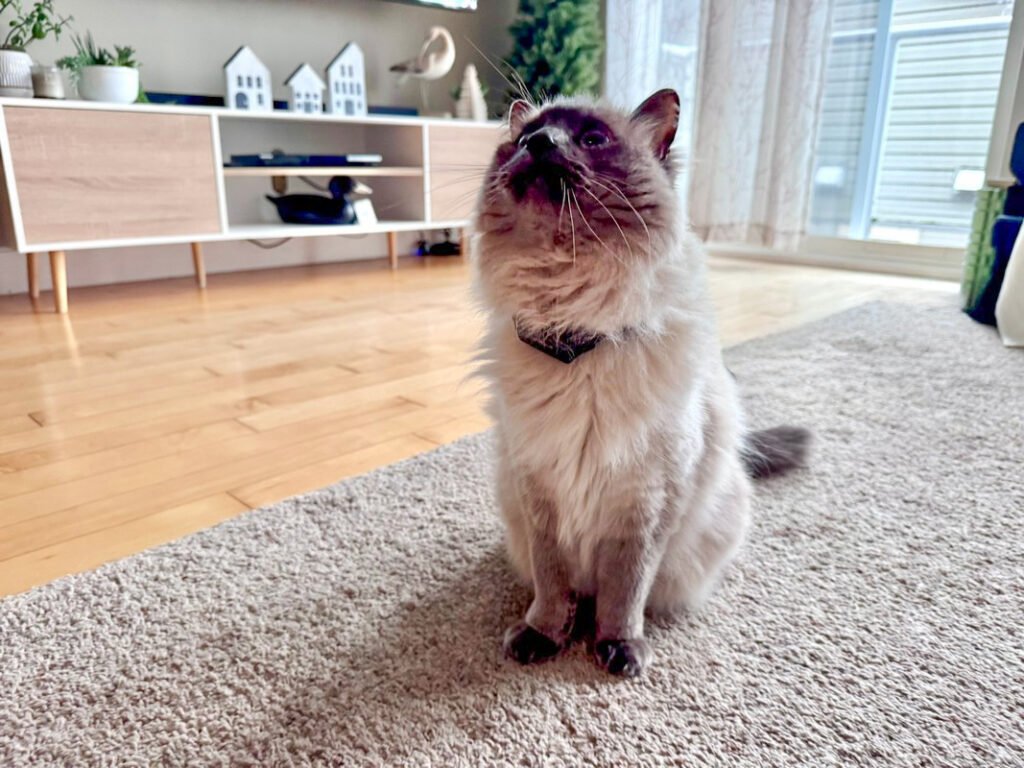

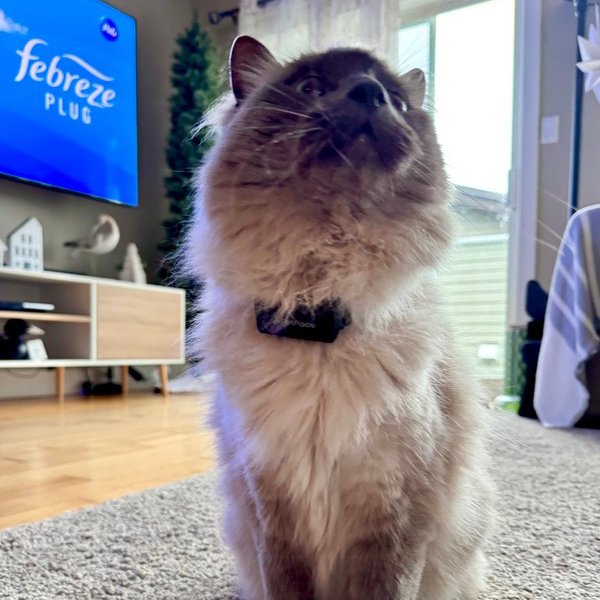
I’ll be honest right out of the gate: Milo is 13 years old, and that number has started to weigh on me in ways it didn’t a few years ago.
He’s a healthy cat. Active, opinionated, still very much the fluffy ruler of this household. But senior cats are notoriously good at hiding discomfort, and the gap between vet appointments can feel long when you’re watching a 13-year-old Balinese and wondering if that afternoon nap was just an afternoon nap or something worth paying attention to.
That’s exactly what led me to the PetPace Smart Cat Collar. Not the GPS (though that’s a genuinely useful bonus when he decides the backyard needs patrolling). The health monitoring. Specifically, the idea that I could have continuous insight into Milo’s vital signs, stress levels, and sleep patterns without booking an appointment every time something seemed slightly off. I tested it over several weeks, paid close attention to how Milo reacted to wearing it, and dug into everything the app actually tells you day to day. Here’s the full breakdown.
Editor Note: Trusted Pet Review may earn a commission on qualifying purchases made through links in this post, at no extra cost to you. We only recommend products we’d genuinely consider for our own pets.
The first-order pricing makes entry easy, but the ongoing subscription rate is the number that matters long-term. This review covers both, along with what the data actually shows you day to day.
The PetPace Cat Collar goes beyond simple tracking by monitoring vital signs like temperature, pulse, respiration, stress levels, sleep, and activity. With AI-powered health insights and built-in GPS, it gives cat owners a deeper look at their pet’s overall wellness.
GUARANTEED BEST PRICE
USE COUPON CODE TECHNO10 AT CHECKOUT TO SAVE 10%
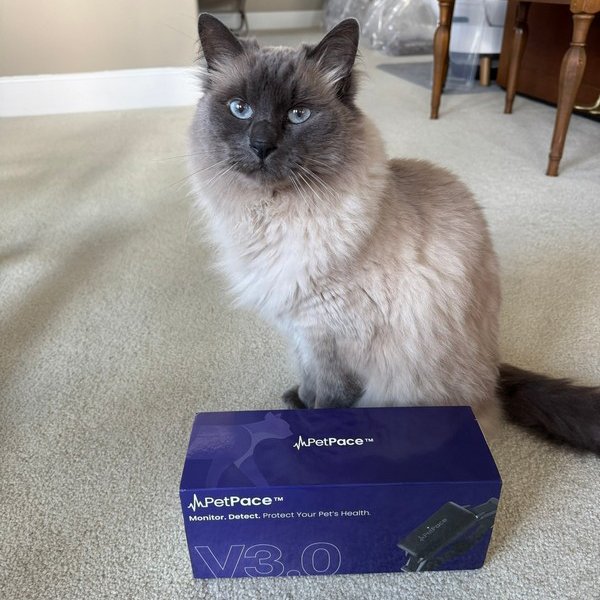
What Is the PetPace Smart Cat Collar?
The PetPace collar is a health-first wearable for cats. That sounds simple, but it’s genuinely different from what most smart pet collars do.
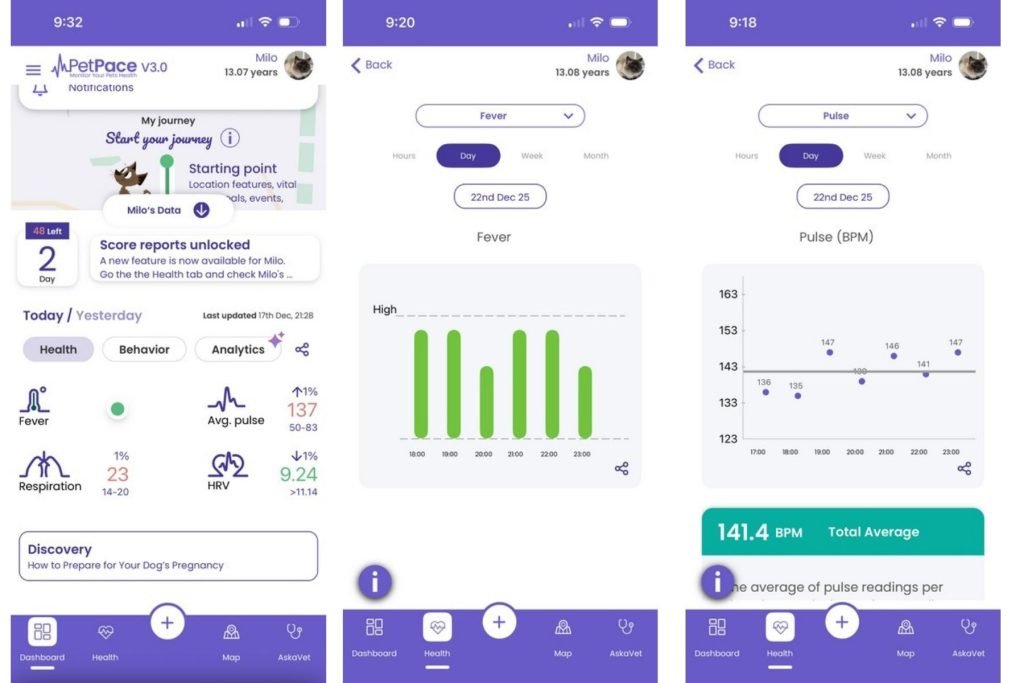
Most collars in this category track location and movement, then use activity patterns to make inferences about health. That approach has value, but it’s limited. PetPace goes a step further by monitoring actual physiological data: body temperature, pulse rate, respiratory rate, and heart-rate variability (HRV). It collects that data every two minutes and runs it through AI analytics designed specifically for feline health patterns.
GPS is built in. It works well. But it’s clearly the secondary feature here, not the main event. Think of it less like a smart tracker and more like a wearable monitoring system your vet would actually find useful.
Key Features at a Glance
- Continuous monitoring of temperature, pulse, and respiratory rate
- Heart-rate variability (HRV) tracking for stress and comfort insights
- Personalized activity and sleep scores built around your cat’s individual baseline
- AI-powered health alerts when the system detects concerning patterns
- GPS location tracking with real-time updates
- Health data collected every two minutes
- 24/7 veterinary support via chat and video through the app
- Ability to share health data directly with your vet before or after appointments
- Apple Watch compatibility
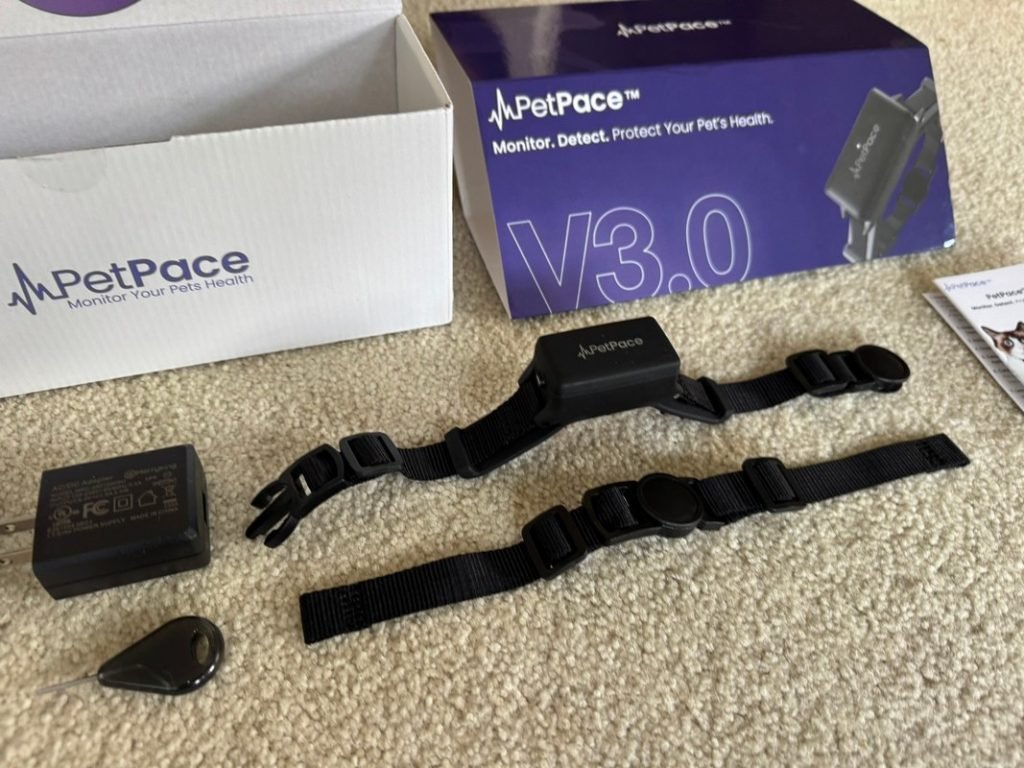
Setup and Milo’s First Impression (Spoiler: He Had Thoughts)
Getting the collar on Milo was the easy part. Getting Milo to accept the collar was a separate negotiation entirely.
He had not worn a collar before. If you have ever introduced a collar to a cat with zero prior collar experience, you already know what happened next. There was a period of high drama. A lot of deliberate, exaggerated walking. Some pointed sitting-very-still-and-staring-at-me. The full theatrical production.
To be fair to the collar: it is not excessively bulky for how much technology is packed into it. The design is genuinely streamlined given everything happening inside. After a couple of days, Milo had mostly moved on and returned to his regular routine of strategic napping and conducting property inspections. That is about as fast an adjustment as I have seen for a first-time collar cat.
The app setup was simple: create a profile for Milo with his age, weight, and breed, and the system starts building his baseline from there. I appreciated that it calibrates to the individual cat rather than comparing him to a generic average. A 13-year-old Balinese has different normal parameters than a 3-year-old Bengal.
- Monitors actual vital signs, not just movement Temperature, pulse and respiratory rate tracked continuously, which is genuinely rare in cat wearables at any price point.
- Two-minute data collection Builds a thorough, accurate health baseline rather than the sparse snapshots most collars provide.
- AI alerts flag meaningful patterns The system surfaces changes worth investigating without generating constant noise or false alarms.
- Especially valuable for senior cats Continuous baseline monitoring is most useful exactly when cats are most likely to hide symptoms, which is in their later years.
- 24/7 vet access and direct data sharing included Walk into appointments with trend data instead of a vague description of something feeling off.
- GPS adds useful safety coverage Works well for cats with outdoor access to the yard or limited roaming range.
- 12-month subscription required upfront There is no month-to-month option, which makes entry a real commitment rather than a low-risk trial.
- Costs more than basic GPS collars The pricing reflects health monitoring and vet access, not just location tracking. Make sure that value matches what you actually need.
- Adjustment period for first-time collar cats Most cats settle within a few days, but the first introduction can involve significant theatrical protest.
- GPS not built for large outdoor ranges Works well for yard access; a dedicated GPS collar is the better fit for cats that roam further.
- App is data-dense Rewards owners who engage with it regularly; less useful if you prefer simpler summaries.
Real-World Testing: What the Data Actually Shows You
Vital Signs: The Part That Makes This Different
The core of what PetPace does is monitor body temperature, pulse, and respiratory rate on a continuous basis throughout your cat’s normal day.
Those are the same three things a veterinarian checks during a physical exam. The difference is that a vet captures them during a single snapshot, usually while the cat is stressed from being at the clinic. PetPace captures them when Milo is asleep on the couch, or patrolling the back garden, or doing whatever he does at 3am that sounds considerably more active than any of his daytime behavior.
That context matters. A baseline built from thousands of data points during normal daily life is genuinely more useful than a single reading taken while your cat is giving the vet a withering look. For Milo, seeing his resting temperature and pulse stabilize into a consistent range over the first week was reassuring in a way I did not anticipate. It gave me a reference point. Now when something looks different from that baseline, I notice it as meaningful rather than just wondering if I am overthinking it.
Stress Monitoring: The Feature That Genuinely Surprised Me
I expected to appreciate the vital signs tracking. I did not expect the heart-rate variability (HRV) data to be as useful as it turned out to be.
HRV measures the variation between heartbeats, which functions as a proxy for the nervous system’s state. Higher variability generally indicates a more relaxed physiological state. Lower variability can indicate stress, discomfort, or the body working harder than usual.
In practice, this gave me visibility into something I had no way to track before: whether Milo was actually comfortable on a given day, even when his behavior looked normal. Cats are experts at appearing fine when they are not. The HRV data gives you a second layer to look at when something feels slightly off but you cannot put your finger on what. I will not pretend I became a fluent HRV reader overnight, but the app does a reasonable job of contextualizing the numbers, and the AI alerts helped me understand which changes were worth paying attention to.
Sleep and Activity: Getting His Actual Baseline
Here is the thing about Milo’s sleep patterns: I thought I knew them. I was wrong about several details.
Milo is a champion napper. This was not a surprise. But the PetPace data showed me when he naps, for how long, how his sleep quality varies, and which parts of the day he is actually active versus just relocating from one rest spot to another. The distinction between “being awake” and “actively moving” turned out to be more interesting than I expected.
The personalized scoring is what makes this useful rather than just noisy. The system learns what is normal for Milo specifically, then surfaces deviations from that baseline rather than comparing him to some average cat. A sudden drop in activity is meaningful for a typically active cat. It is less meaningful for a cat whose baseline is already low. PetPace accounts for that difference. For a senior cat, those shifts in baseline can be early signals worth taking to a vet.

Pro Tip
If you have a senior cat (8 or older), give the system a full two to three weeks before drawing conclusions from the data. The AI needs enough baseline readings to understand what is normal for your specific cat before its alerts become meaningfully calibrated. The first week of data is the foundation, not the verdict.
The AI Insights: Useful Translator, Not an Alarm System
A lot of health data is only as good as your ability to interpret it. PetPace addresses this by running the collected data through AI analytics and generating alerts when the combination of signals suggests something worth looking at.
In practice, this felt less like an alarm system and more like a translator. The alerts I received were specific enough to be actionable (respiratory rate trending higher over the past 48 hours) rather than vague enough to cause unnecessary panic. I took one of those alerts to my vet with the accompanying data, and she commented that the trend data made the conversation more useful than a verbal description of “he just seemed a bit off” would have been. That is exactly the use case PetPace is designed for. Not diagnosis. A heads-up that something might be worth checking, backed by actual numbers.
GPS Tracking: Solid Bonus Feature
The GPS works well. It is accurate enough for Milo’s backyard explorations, updates reliably, and gave me useful visibility during a particular afternoon when he decided to investigate a section of the property he does not usually visit.
I would not position the GPS as the reason to buy this collar. If location tracking is your primary concern for a cat with significant outdoor range, a dedicated GPS collar is probably a better fit. But as a built-in layer of safety alongside the health monitoring, it earns its place without any complaints from me.
The App Experience
The PetPace app is data-forward, which is either a pro or a con depending on how you approach it.
If you enjoy having access to detailed metrics and trend graphs, you will appreciate what is there. The data is organized well, the historical view is easy to navigate, and the AI summary features do a good job of highlighting what is actually worth your attention rather than making you dig through everything manually. If graphs are not your thing, there is an adjustment period. The app rewards curiosity. The less time you spend with it, the less useful it feels.
The 24/7 vet access is genuinely convenient. I used it twice during the testing period: once to ask a quick question about a brief temperature spike (resolved quickly, turned out to be nothing) and once to share a week of data ahead of Milo’s regular appointment. Both interactions were useful. The video consultation option is there for situations that need more than a quick chat.
What I’d Change
No product is perfect, and a few things would make this one better:
- The subscription commitment. Twelve months is a meaningful ask upfront. A monthly option at a higher per-month rate would make entry easier for owners who want to try before committing long-term.
- The app learning curve. It is not difficult, but it is not intuitive right away either. A better onboarding flow for owners who are not already data-comfortable would help the first few weeks feel less overwhelming.
- Clearer alert guidance. Most alerts are well-framed, but a few did not specify what to actually do with the information. Clearer guidance on monitor for 24 hours versus call your vet today would sharpen the experience considerably.
That said, none of these are dealbreakers. They are refinements, not fundamental problems with what the product does.
Who This Is Best For
Choose the PetPace if:
- Your cat is a senior (roughly 8 or older) and you want proactive health visibility between vet visits
- You have a cat with a chronic condition or a history of health issues that benefit from closer monitoring
- You want to walk into vet appointments with actual trend data instead of “he just seemed off”
- Your cat spends time outdoors and you want location tracking and health monitoring in one collar
- You are comfortable engaging with an app and appreciate access to detailed metrics
Skip the PetPace if:
- You need basic location tracking only and the subscription cost is not justified by that alone
- Your cat is young, healthy, and low-maintenance with no specific health monitoring needs
- Your cat is unlikely to tolerate a collar at all (some cats never fully adjust regardless of design)
- You prefer a one-time purchase without an ongoing subscription commitment
Final Verdict: Is the PetPace Smart Cat Collar Worth It?
For Milo, it has been worth it. Genuinely.
The vital signs monitoring gave me a baseline I did not have before. The HRV data added a layer of visibility into his comfort that I found surprisingly useful. The AI alerts have been specific enough to feel actionable rather than anxiety-inducing. He adjusted to wearing the collar faster than I expected, and after the first couple of days it became part of his normal routine without complaint.
The subscription model requires a real commitment, and I will not pretend otherwise. But for a senior cat like Milo, the peace of mind that comes from continuous health monitoring is a different kind of value than a one-time gadget purchase. It is the kind of thing that makes you feel like you are actually paying attention, not just reacting when something goes wrong.
If you want a collar that goes beyond location tracking and gives you a meaningful window into how your cat is actually doing day to day, the PetPace Smart Cat Collar earns a solid recommendation. Picky cats and senior cats especially.
Milo’s verdict: he tolerates it, which from him is basically a five-star review.
The PetPace Cat Collar goes beyond simple tracking by monitoring vital signs like temperature, pulse, respiration, stress levels, sleep, and activity. With AI-powered health insights and built-in GPS, it gives cat owners a deeper look at their pet’s overall wellness.
GUARANTEED BEST PRICE
USE COUPON CODE TECHNO10 AT CHECKOUT TO SAVE 10%


