

I live in a wooded neighborhood about a mile from town, which sounds like a nice way of saying my development sits far enough back from the main road that single-satellite GPS collars have a complicated relationship with accuracy on our property. Trees, elevation changes, cloud cover: GPS tracking that works fine in an open suburban yard does not always hold up on our walks. So when I came across SATELLAI at CES earlier this year and saw that it runs five satellite systems simultaneously, I moved it straight to the top of my testing list.
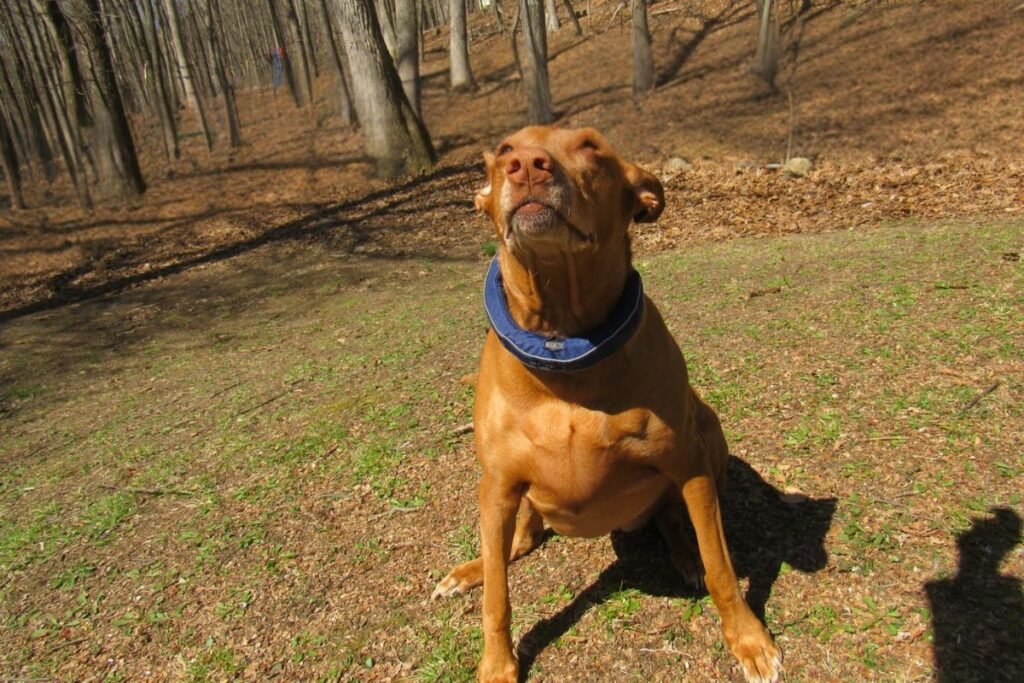
Freya, my Pharaoh Hound, provided the testing environment: a woodsy half-mile route, a healthy prey drive pointed at every squirrel within what she considers reasonable commuting distance to the next zip code, and a neck that collar manufacturers have historically found inconvenient. (Pharaoh Hounds have long, elegant necks. This is lovely for them and mildly annoying for me when sizing collars.) Here is what I found after real-world use.
Editor’s Note: Trusted Pet Review may earn a commission on qualifying purchases made through links in this post, at no extra cost to you. We only recommend products we’d genuinely consider for our own pets.
The five-satellite system and indoor beacon features set this apart from most GPS collars. This review covers real-world testing in a wooded neighborhood where single-system GPS collars struggle, plus an honest look at the AI health features after extended use.
What Is the SATELLAI GPS Dog Collar?
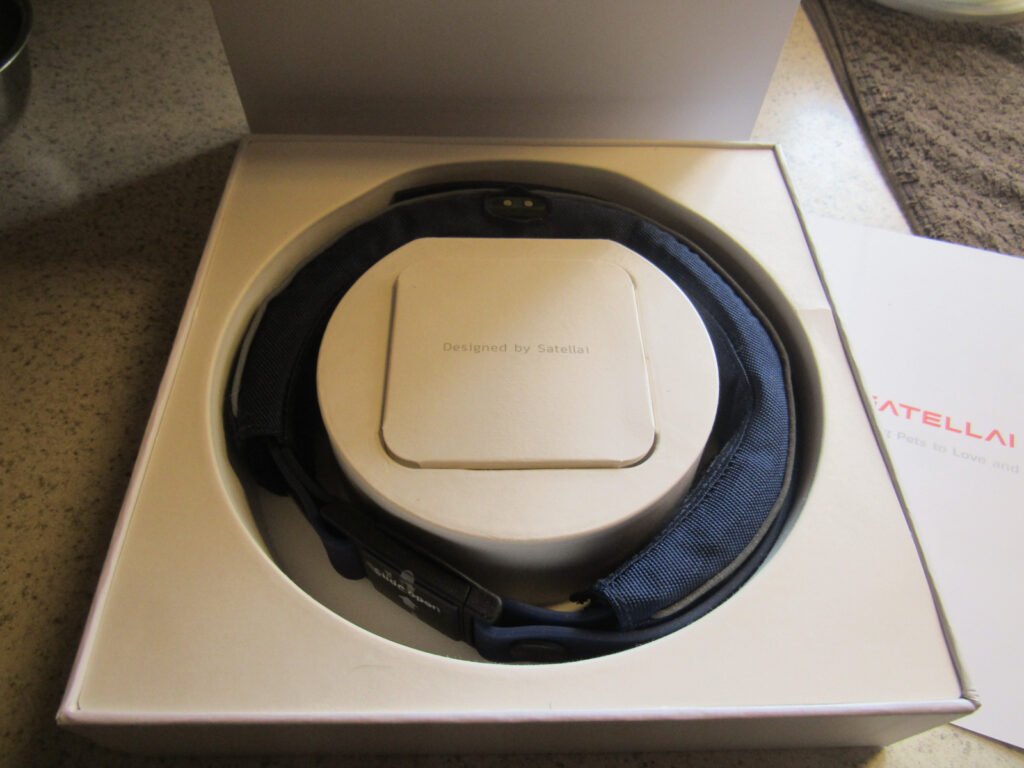
SATELLAI is a smart GPS collar that combines real-time tracking, customizable virtual fencing, indoor training beacons, and AI-powered health monitoring in a single device. It is designed for medium to large breeds and fits neck sizes from 14 to 30 inches.
What sets it apart from the crowded GPS collar market is the satellite infrastructure underneath it. Most GPS collars run a single satellite system, usually standard GPS. SATELLAI taps into five: GPS, Galileo, GLONASS, QZSS, and BeiDou, with dual-frequency L1/L5 antennas on top of that. The practical result is better accuracy in the environments where standard GPS struggles most, including under tree cover, near buildings, and in variable weather conditions.
The collar also works in 180 countries, which is a meaningful differentiator from competitors that cap coverage at North America or at best continental coverage. Whether that matters depends on your travel habits, but it is worth knowing the infrastructure is there.
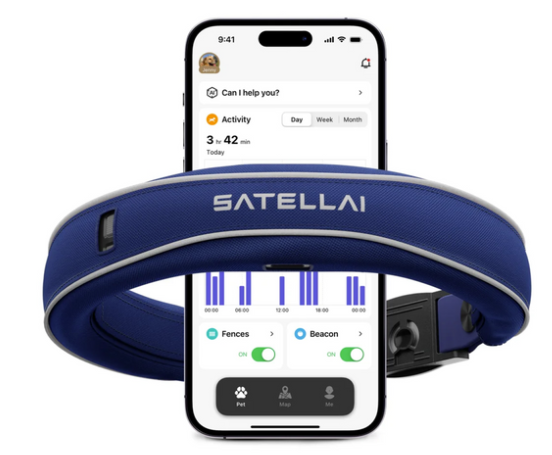
The SATELLAI Smart GPS Dog Collar combines real-time tracking, customizable virtual fences, and AI-powered health insights in one sleek, durable design. With global coverage, indoor beacons, and up to 7 days of battery life, it’s built for active dogs and peace-of-mind pet parents.
LIMITED TIME OFFER !
Save $130 OFF WITH COUPON CODE TECHEXCL
SATELLAI at a Glance
Satellite Systems | 5 systems: GPS, Galileo, GLONASS, QZSS, BeiDou |
Antenna Type | Dual L1/L5 frequency antennas |
Coverage | 180 countries worldwide |
AI Features | PetSense AI: Head Shake Detection, Breathing Rate Monitoring, Daily/Weekly Summaries |
Fencing | Unlimited virtual fences; nested, overlapping, and custom shapes supported |
Indoor Beacons | Included; act as mini indoor fences for restricted areas |
Battery Life | 5 to 7 days; 2-hour magnetic fast charge |
Waterproofing | IP68 (water AND dustproof) |
Collar Fit | 14 to 30 inch neck sizes; medium to large breeds only |
Feedback Options | Custom audio, vibration, voice commands |
Price | Around $500; subscription $9.99/month or $119.88/year |
Key Limitation | Not suitable for small breeds; proprietary charger |
What SATELLAI Actually Delivers
GPS Accuracy in the Places It Matters Most
Here is the thing about GPS accuracy: you only really notice it when it fails. A collar that works great in an open backyard may give you a location that is off by 30 feet or simply stop updating in a wooded area with obstacles. That gap matters considerably more when you have a dog who could cover those 30 feet in about two seconds.
Testing on our regular wooded route, the SATELLAI held its position much more consistently than single-system collars I have used in the same environment. The five-satellite system and dual-frequency antennas are doing real work there. The collar is pulling signal from GPS, Galileo, GLONASS, QZSS, and BeiDou simultaneously, which means it has far more data points to triangulate from than a collar running just one system. Under heavy tree cover, that shows up as fewer position jumps and more reliable real-time updates.
Historical Tracking: More Useful Than It First Sounds
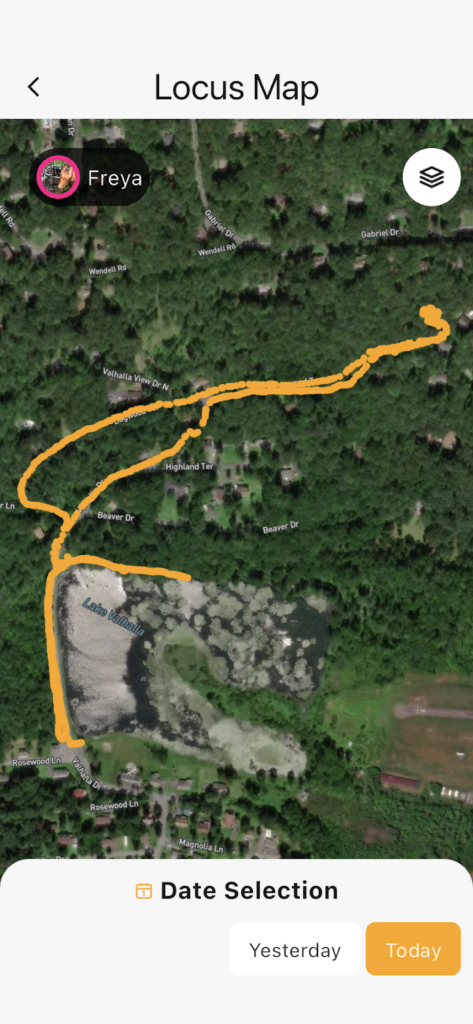
The Locus Map feature logs everywhere your dog has been, not just where they are right now. I want to make a case for why that matters even when your dog is not actually lost, because it sounds optional until it suddenly is not.
Freya once came home severely ill after spending time in the yard. I eventually traced it to cicada killer wasps nesting under the deck, which was one of her favorite stakeout spots for watching squirrels. On a small property, I was able to figure this out through process of elimination. On a large piece of land, I genuinely might not have. Knowing exactly where she had been that day would have cut that troubleshooting down considerably.
That is the argument for historical tracking. It is not about finding a lost dog in the moment. It is about having context when something goes wrong and you are trying to figure out what, where, and why.

Pro Tip
If your dog has free range of a large property, spend a week just watching the Locus Map data before you need it for anything. You will learn their actual patrol patterns and favorite spots, which tells you a lot about their daily habits and gives you a useful reference point if behavior ever changes.
PetSense AI Health Monitoring
Activity tracking is table stakes for smart collars at this point. Most of them count steps and estimate calories. PetSense AI is attempting something more layered than that. It tracks running, walking, and rest, then uses breed-specific benchmarks to build a baseline for what is normal for your specific dog. When behavior deviates from that baseline, it flags it.
The newer features added since the initial launch go further. Head Shake Detection can catch ear discomfort before it escalates to an obvious symptom. Breathing Rate Monitoring adds a passive vital sign check to the daily data. The AI-generated daily and weekly summaries pull everything together into a readable format so you are not left parsing raw numbers.
One honest observation: the PetSense AI needs a few weeks to build a meaningful baseline before the health summaries feel genuinely useful. Out of the box, the activity data looks similar to what you get from other collars. Give it time to learn your dog’s actual patterns and it gets considerably more informative.
There is also a built-in AI chat in the app for dog health questions. Real example from one of our walks: Freya displayed an intense interest in something she absolutely should not have been interested in, and I needed a fast answer about whether it was a health risk. Having that chat directly in the app rather than switching to a browser and sorting through search results was genuinely handy. It is not a vet replacement, but it is a useful first-pass resource.
Unlimited Virtual Fencing
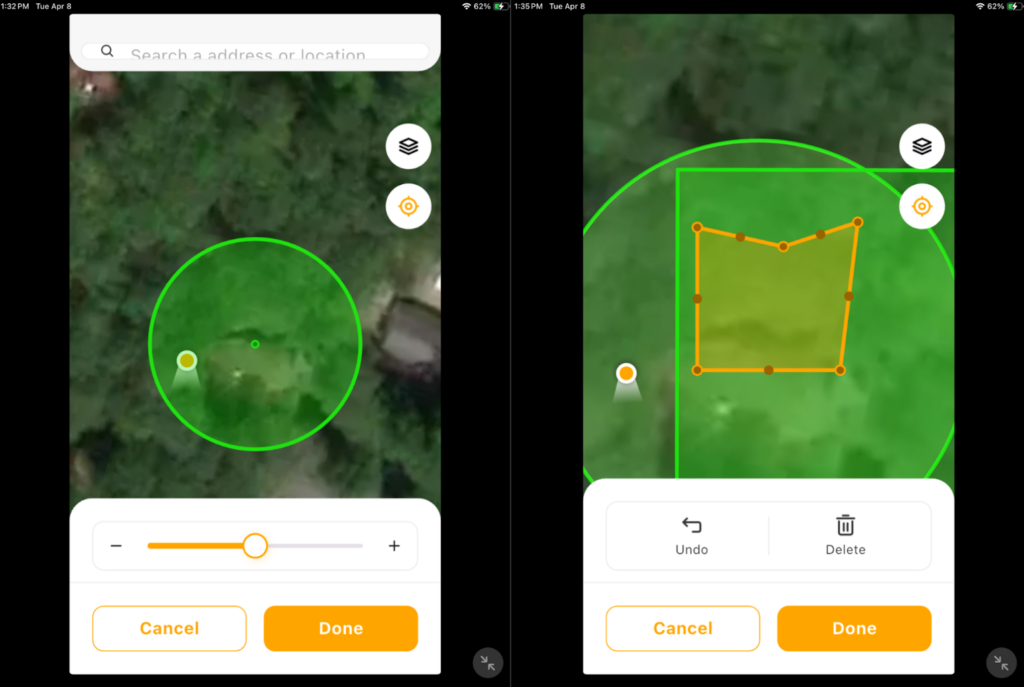
The fence-building tools are flexible in ways that matter for real properties. You get unlimited zones with no cap on how many you can store, and the shapes are genuinely customizable: circles, custom polygons, nested boundaries, overlapping zones. You are not limited to a circle around a yard or a single perimeter.
For households with complicated layouts, vacation properties, or regular travel to different locations, being able to store as many named fences as you need without paying extra for each one is a practical advantage. Setup is straightforward: open the app, go to the Fences section, choose a shape or draw a custom boundary, and adjust from there.
Indoor Beacons
This feature does not get enough attention in GPS collar comparisons, and it should. The beacons act as mini virtual fences for specific spots inside the house. Put one near the cat food station and the collar gives feedback when Freya gets too close. Put one near the garbage can and the same thing happens.
For anyone with a dog who has a complicated relationship with the garbage, the cat’s food, or any other off-limits indoor zone, the beacons solve a problem that GPS-only collars cannot address at all. The training reinforcement is consistent and does not require you to be in the room watching.
Battery Life That Changes Your Routine
Five to seven days on a charge is a fundamentally different experience from collars that need charging every day or two. With a one-to-two-day collar, charging becomes a planning problem: when do I take it off, how long will it be off, what happens if I forget. With five to seven days, it becomes background maintenance you think about roughly once a week.
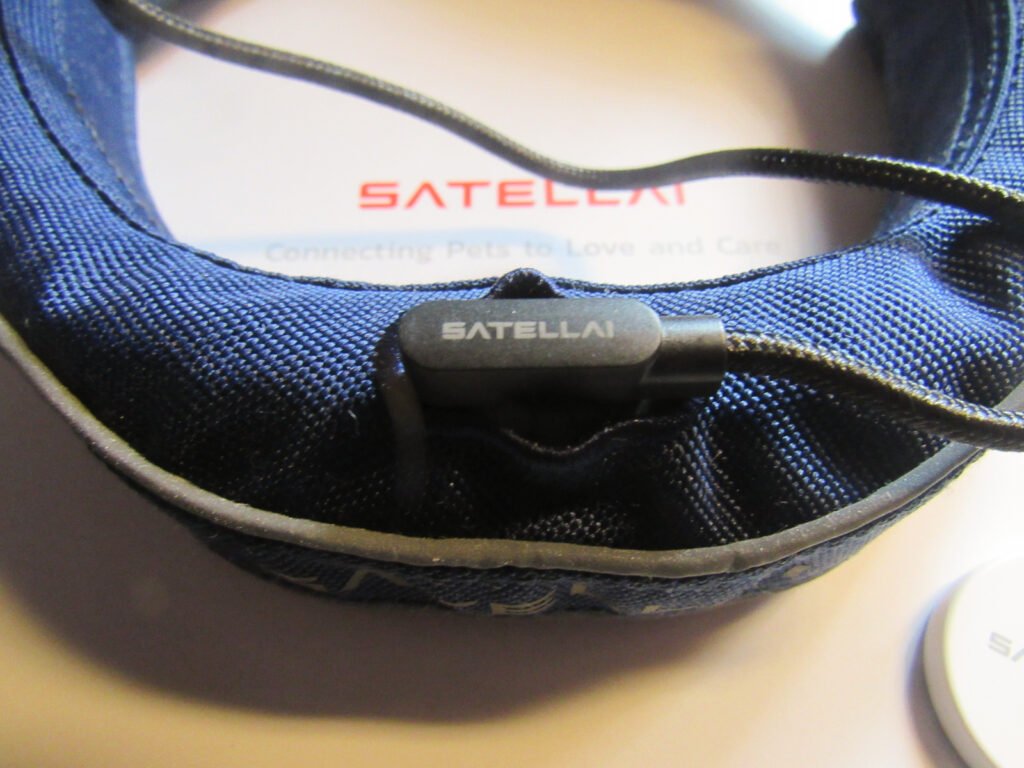
The two-hour magnetic fast charge is practical and fast. The charger snaps on cleanly and the charge time is short enough that you can work it around a nap without losing coverage. The proprietary charger design is a real limitation, though. You know how I feel about these. Keep it somewhere you will always find it, and if you travel, make sure it goes in the bag. Freya ate one of these types of chargers when she was a puppy, and waiting on a replacement while hoping she did not eat anything else consequential is not an experience I would wish on anyone.
Setup and the Magnetic Buckle
Connecting the collar to the app was one of the faster setup experiences I have had with a GPS device. Answer a few questions about your dog, tap the button to search for the collar, and it connects within a second. That sounds like a low bar, and honestly it should be a basic feature, but I have spent genuinely frustrating amounts of time waiting for GPS collars to find their own apps. When setup just works on the first try, I notice.
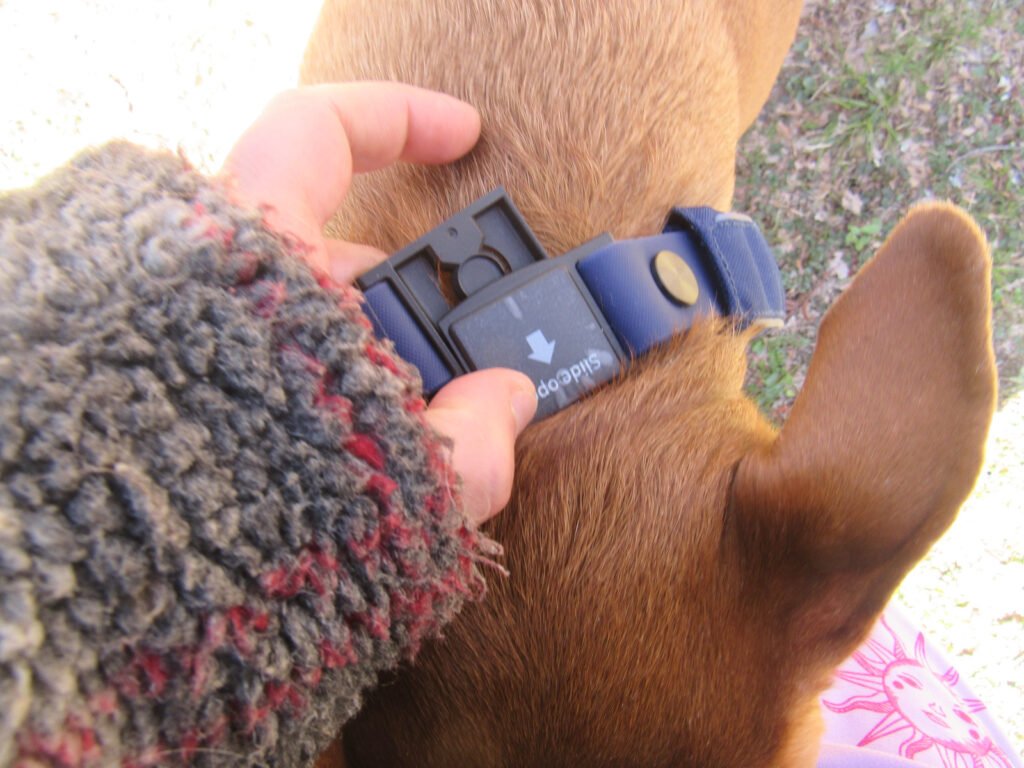
The magnetic buckle deserves specific mention for Freya’s sake. She recognizes the walking collar as a signal that we are heading outside, and her response to that information is to move constantly so I cannot put it on. The magnetic buckle closes with one hand, which cuts the wrestle-your-dog-into-gear routine down considerably. Small thing, real difference.
I was also pleasantly surprised by how well it fit Freya’s giraffe-like neck. Pharaoh Hounds have longer, more slender necks than most breeds their size, and collars frequently sit wrong or require constant repositioning. The SATELLAI fit without that problem, which is not something I take for granted at this point.
What to Know Before You Buy
Not Designed for Small Breeds
The 14-inch minimum neck size is a hard cutoff, not a fit recommendation. It excludes most dogs under roughly 25 to 30 pounds, which is a real portion of the dog-owning population. If you have a small breed, this collar is simply not built for your dog. There is no workaround.
For medium and large breeds, the fit range is generous. The 30-inch upper limit covers most large and giant breeds comfortably.
Subscription Is Required
An active subscription is needed to access the GPS tracking, fencing, and AI features. At $9.99 per month or $119.88 per year, it is in line with what EVERY major GPS collar charges for similar access. That does not make the ongoing cost disappear, but it is worth saying clearly: this is industry standard, not an unusual ask.
Price
Around $500 for the collar puts SATELLAI toward the upper end of the mid-range for GPS tracking collars, not at the extreme top. For the feature set you are getting (five-satellite coverage, AI health monitoring, indoor beacons, global coverage), it is positioned reasonably against the competition. Whether it is the right value for your household depends on which of those features you will actually use.
Frequently Asked Questions
Does the SATELLAI collar work in wooded or rural areas?
Better than most. The five-satellite system (GPS, Galileo, GLONASS, QZSS, BeiDou) combined with dual L1/L5 frequency antennas gives it significantly more signal to work with than single-system collars. In real-world testing in a wooded neighborhood with tree cover and elevation changes, it tracked consistently where single-system collars have historically struggled.
What size dogs does the SATELLAI fit?
The collar fits neck sizes from 14 to 30 inches, covering most medium, large, and giant breeds. It does not work for small breeds, and that is a hard limitation of the hardware design rather than a fit adjustment issue. If your dog’s neck is under 14 inches, this is not the right collar.
What is PetSense AI and what does it actually track?
PetSense AI is SATELLAI’s health monitoring system. It tracks activity levels (running, walking, resting) against breed-specific baselines, flags behavioral deviations, monitors breathing rate, detects head shaking (which can indicate ear discomfort), and generates daily and weekly AI summaries of your dog’s health patterns. It takes a few weeks to build a meaningful baseline, so expect a ramp-up period before the insights feel personalized.
How do the indoor beacons work?
The beacons are small devices you place at specific indoor spots you want to keep off-limits, such as near a garbage can, a cat food station, or a piece of furniture. When the dog wearing the SATELLAI collar gets within range of a beacon, it triggers the same feedback response as crossing a virtual fence boundary outdoors. It brings the fencing functionality inside in a way that GPS-only collars cannot manage.
Do I have to pay a subscription on top of the collar price?
Yes. A subscription is required to access GPS tracking, virtual fencing, and the AI health features. Plans run $9.99 per month or $119.88 per year. This is consistent with what other major GPS collar brands charge for comparable access, but it is a real ongoing cost to factor into the total price.
How long does the battery actually last?
SATELLAI rates the battery at five to seven days, and in real-world use that held up reasonably well, though active GPS tracking does consume more power than fence-only mode. The two-hour magnetic fast charge is genuinely fast. The charger is proprietary, so keep track of it. There is no universal cable substitute, and replacement takes time.
Does SATELLAI work internationally?
Yes, in 180 countries. Most GPS dog collar competitors either only work in the United States or at best in North America. If you travel internationally with your dog, or simply want global coverage as a safety net, SATELLAI is one of the few collars where that is a real feature rather than a marketing qualifier.
Is SATELLAI suitable for a calm, low-activity dog?
Technically yes, but the feature set is built around active dogs and owners who want extensive monitoring. The AI health tracking and historical location data deliver the most value when a dog is actually moving around and exploring. For a dog who rarely leaves a small, secure yard, the five-satellite accuracy and global coverage are solving problems that may not exist in your household.
Final Verdict: Is the SATELLAI Collar Worth It?
For the right dog and the right household, yes. The five-satellite coverage with dual-frequency antennas is a genuine technical advantage over most GPS collars, and it shows in environments where standard GPS struggles. The PetSense AI health monitoring goes further than activity counting in ways I find genuinely useful. The indoor beacons solve a real problem that GPS-only collars simply cannot address.
The honest version of the recommendation: SATELLAI is built for active dogs in households that want comprehensive monitoring rather than just a basic tracker. If Freya is your mental model (energetic, tends toward adventure, lives somewhere with GPS challenges), this collar is very well suited to that situation.
If your dog is the couch-to-yard-and-back type who never tests a boundary, the feature set here is probably more than you need. But if your dog keeps you on your toes, SATELLAI is one of the most capable collars I have tested at this price point. The five-satellite system alone makes it worth a serious look for anyone who has ever had a GPS collar let them down at an inconvenient moment.
Still not sure? Check out our 5 Best Dog GPS Collars and Fences article for more options.
The SATELLAI Smart GPS Dog Collar combines real-time tracking, customizable virtual fences, and AI-powered health insights in one sleek, durable design. With global coverage, indoor beacons, and up to 7 days of battery life, it’s built for active dogs and peace-of-mind pet parents.
LIMITED TIME OFFER !
Save $130 OFF WITH COUPON CODE TECHEXCL


