
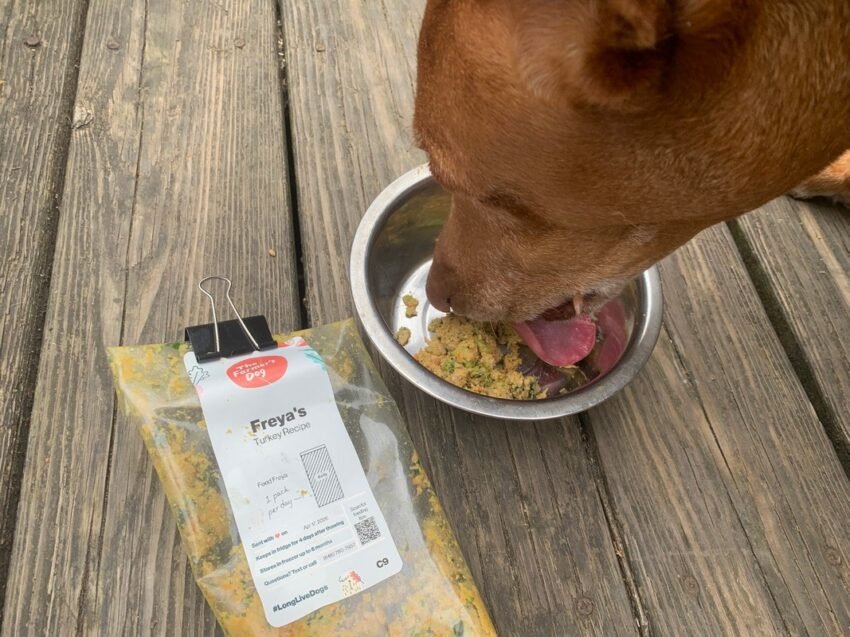

I’ve been reading dog food ingredient labels for years, and I’ll be honest: it’s a habit that mostly just ruins your afternoon. Once you start parsing rendered meals and “poultry by-product concentrate,” you can’t unparse them. For Freya, my Pharaoh Hound who has a history of seasonal allergies and a stomach that occasionally stages protests, ingredient transparency isn’t just a nice-to-have. It’s the whole decision.
That’s how I landed on The Farmer’s Dog. The pitch is clean and easy to understand: fresh ingredients, gently cooked, portioned specifically for your dog, delivered frozen. I tested three recipes with Freya over several weeks: Turkey (grain-free), Beef with Grains, and Chicken with Grains. My focus was ingredient quality, how the food performed with her sensitive system, what the real logistics looked like once delivery arrived, and what the ongoing cost actually worked out to once the introductory trial pricing was gone.
The short version: the food is genuinely good. The ingredients are what the company says they are. Freya, who will graze grass like a goat and then turn up her nose at a perfectly reasonable kibble, ate every single meal without drama. The trade-off is cost, and that trade-off is worth understanding clearly before committing to a subscription.
Editor’s Note: Trusted Pet Review may earn a commission on qualifying purchases made through links in this post, at no extra cost to you. We only recommend products we’d genuinely consider for our own pets.
The trial box is heavily discounted from the ongoing subscription price. The real cost question is the full delivery rate after the trial ends, not the introductory offer. This review covers both.
Fresh, human-grade food made from real ingredients for a healthier pup today and tomorrow. Recipes made from whole food ingredients, slow cooked for nutrition and flavor and always fresh.
BEST PRICE ON WEB
60% OFF YOUR FIRST BOX

What The Farmer’s Dog Actually Is
The Farmer’s Dog is a fresh dog food subscription service, and that distinction matters. This is not food that gets packaged in bulk and sits on a shelf waiting to be purchased. It’s made after the order is placed, portioned for a specific dog based on the profile created at signup, and shipped frozen directly to the door on a schedule you set.
The recipes are gently cooked at low temperatures with whole food ingredients: actual turkey, actual beef, actual chicken, alongside vegetables and supplements formulated to meet AAFCO nutritional standards for all life stages. The ingredient lists are short and readable. There are no rendered meals, no by-product concentrates, and no ingredient names that require a follow-up search to understand what they actually are. For anyone who has spent time parsing kibble ingredient panels, the difference is immediate and obvious.
FYI: “human-grade” has a specific legal meaning in pet food. It means the ingredients and the production facility both meet the standards required for human food manufacturing. It’s not a loosely applied marketing phrase here. That distinction is worth understanding before comparing it to brands that use the term more casually.
The Farmer’s Dog at a Glance
Type | Fresh, gently cooked dog food; subscription delivery service |
Best For | Picky eaters, dogs with sensitive stomachs, owners who want full ingredient transparency |
Recipes | Turkey (grain-free), Beef with Grains, Chicken with Grains, Pork with Grains, Lamb |
Life Stage | Formulated for all life stages; AAFCO complete and balanced |
Customization | Portions sized to individual dog weight, age, breed, activity level, and health goals |
Delivery | Ships frozen; thaw in refrigerator before serving; frequency adjustable |
Made In | USA; human-grade certified ingredients and facilities |
Storage Needed | Freezer space for delivery; refrigerator space for active thawing |
Subscription | Required; pause or cancel online without a phone call |
Trial Offer | Discounted trial box available; ongoing subscription price differs. See pricing section. |
Main Concern | Cost and freezer logistics; not available in retail stores |
How It Works
The Signup and Customization Process
Setting up Freya’s profile was straightforward: breed, age, current weight, target weight, activity level, and any known health concerns. Pharaoh Hounds are genetically leaner dogs, but Freya runs on the larger side for her breed, so getting the portion math right actually matters for her. The fact that the system calculates based on her specific profile rather than a generic chart for her weight class was genuinely useful. For dogs whose caloric needs fall outside the standard range for their breed, that precision adds up.
Recipe selection happens during signup. I started Freya on the Turkey recipe since it’s grain-free, which felt like the right call given her allergy history. The trial box also included the Beef with Grains and Chicken with Grains, which gave me a useful comparison across formulas right from the start.
Delivery and Storage
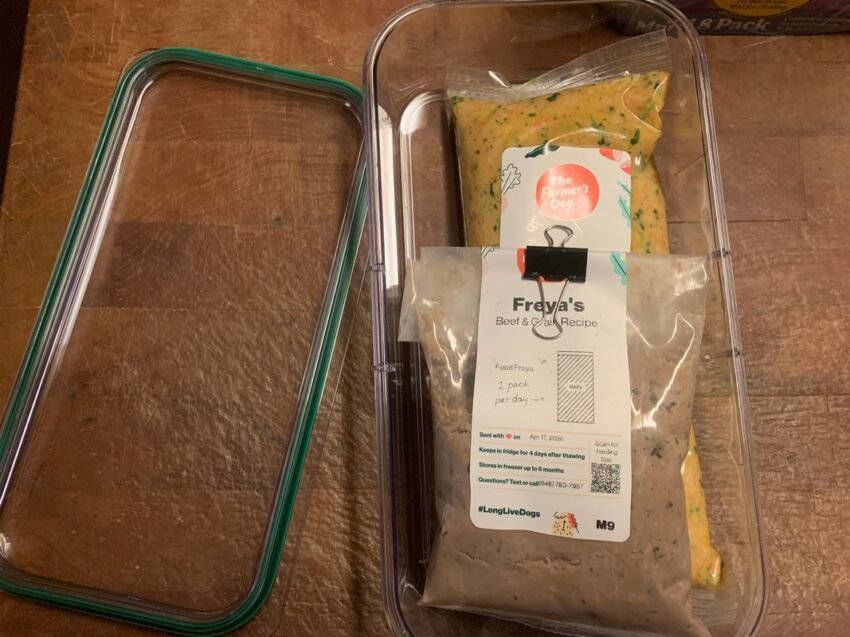
Deliveries arrive frozen in insulated packaging, and you transfer the food to the freezer on arrival, moving portions to the refrigerator to thaw before serving. Each meal portion comes pre-packaged in a flat pouch, which makes daily serving completely straightforward once thawed. I moved a pouch to the fridge the night before and it was ready to go in the morning.
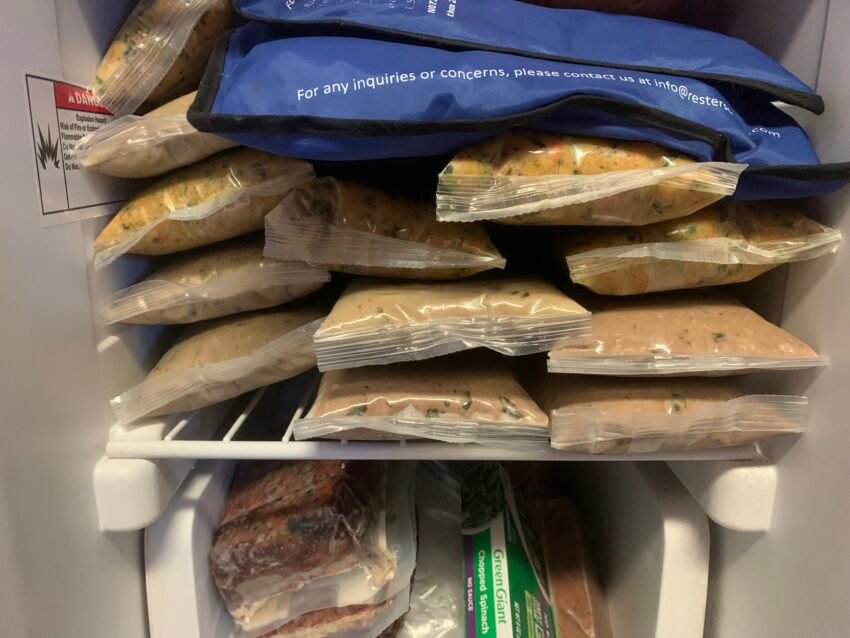
The storage situation is worth thinking through before your first box arrives. A full delivery for a medium or large dog takes up meaningful freezer space, roughly the equivalent of a large bag of frozen vegetables per week of food. My setup handled it fine, but if you’re working with a standard refrigerator-freezer combination in a smaller kitchen, it’s genuinely worth planning around. A chest freezer resolves it entirely. Not a quality concern, just a logistics one.

Pro Tip
When starting The Farmer’s Dog for the first time, transition gradually over seven to ten days by mixing fresh food with the dog’s current food and increasing the fresh food proportion daily. Switching cold turkey, so to speak, increases the likelihood of digestive upset even with high-quality food. The same transition approach applies to any significant food change, regardless of brand.

Recipes and Ingredients
The Turkey recipe was my starting point for Freya, and for a dog with seasonal allergies and a sensitive stomach, the grain-free angle made sense. Ingredients include turkey, turkey liver, sweet potato, broccoli, kale, Brussels sprouts, and a vitamin and mineral supplement. The list is short enough to read in under a minute. There’s nothing in it that made me want to go look something up.
The Beef with Grains recipe includes beef, beef liver, rice, sweet potato, peas, carrots, sunflower oil, fish oil, and a supplement blend. The Chicken with Grains follows a similar structure with chicken as the primary protein alongside rice and vegetables. Both grain-inclusive recipes are appropriate for dogs without specific grain restrictions and offer slightly higher caloric density per serving compared to the grain-free turkey formula.
Across all three, the ingredient quality is consistent with what the company promises. No fillers, no artificial preservatives, no ingredients that function primarily as cheap caloric padding. The food smells and looks like cooked food. That sounds obvious, but it’s meaningfully different from the processed smell of most commercial dog food, and Freya noticed it immediately.
Palatability
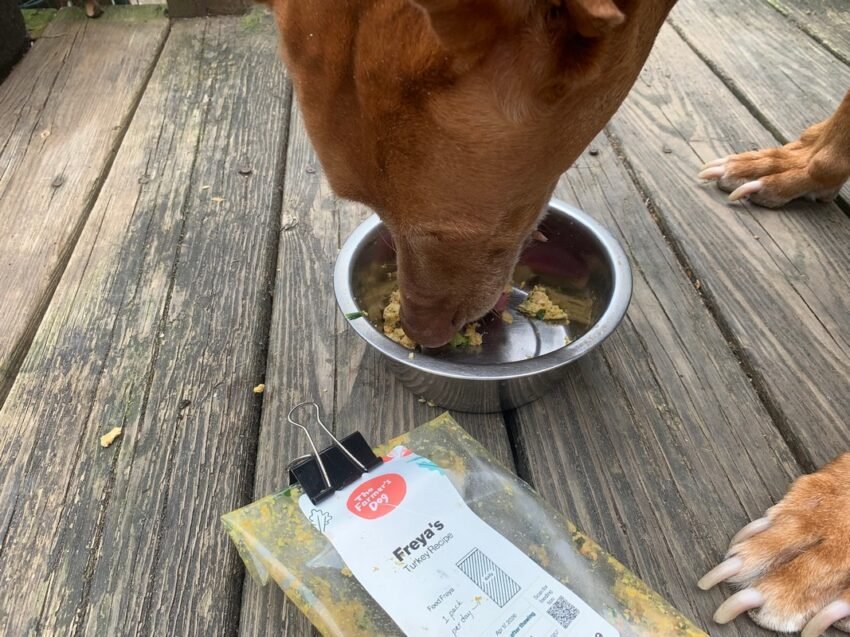
Let me save you some suspense: Freya ate every meal. Every single one.
This is a dog who will dramatically graze grass in the backyard like a tiny goat and then look at a bowl of perfectly reasonable kibble with the energy of someone who has been deeply wronged. Fresh food hit differently. The texture and smell are closer to actual food than to processed pet food, and dogs that have learned to be selective tend to respond to that difference. Freya was not selective about this. No hesitation, no leaving food in the bowl, no performative disinterest. She just ate it.
For dogs with sensitive stomachs or a history of digestive issues, the shorter ingredient lists and absence of common irritants (artificial additives, low-quality proteins, excessive starch fillers) tend to reduce the digestive responses owners associate with lower-quality food. That held true with Freya. No upset stomach during the transition. No unexplained belly rash flare-ups that I’d typically associate with a diet change. That said, digestive response to any food change is individual, and the transition period is not optional regardless of how well the food performs.
- Ingredient transparency Whole food ingredients listed plainly: turkey, beef, chicken, sweet potato, lentils, vegetables. No rendered meals, no by-product concentrates, no ingredient names that require a follow-up search to understand.
- Genuinely customized portions Meal plans are sized to the individual dog based on current weight, target weight, age, breed, and activity level. The portion math is done for the owner, not approximated from a generic feeding chart on the back of a bag.
- AAFCO complete and balanced for all life stages Meets the nutritional standards that matter for long-term feeding, not just supplemental or occasional use.
- High palatability, including picky eaters Dogs that reliably reject new foods or show low enthusiasm for standard kibble tend to respond well to fresh food. The texture and smell are meaningfully different from processed alternatives.
- Flexible subscription management Delivery frequency, portion size, and recipe selection can all be adjusted through the account portal. Pausing or cancelling does not require a phone call.
- Made in the USA in human-grade facilities "Human-grade" carries a specific legal meaning in pet food regulation. It applies to both the ingredients and the production facility, not just the marketing language.
- Significantly more expensive than kibble The ongoing subscription cost for a medium to large dog can run $80 to $150 or more per month depending on size. That is a real number worth working out before the trial ends.
- Freezer and fridge space required Deliveries arrive frozen and need to be thawed in the refrigerator before serving. A full delivery for a large dog takes up meaningful freezer space. This is a logistics consideration, not a quality concern, but it is worth planning for.
- Transition period for some dogs Switching from kibble to fresh food too quickly can cause digestive upset. A gradual transition over seven to ten days is recommended. That said, the transition is the same for any significant food change, not specific to this brand.
- Not available in retail stores Subscription only. There is no option to pick up a bag at a pet store if a delivery is delayed or a box runs low between shipments.
The Cost: What It Actually Works Out To
Let’s be honest about what fresh dog food costs, because the trial box pricing is designed to be easy to say yes to, and the ongoing subscription price is the one that actually matters for the long-term decision.
The trial box is discounted significantly from the regular delivery rate. Once the trial ends, ongoing costs depend on your dog’s size and the portion requirements generated by the profile. For a small dog under 20 pounds, monthly costs typically fall in the $40 to $60 range. For a medium dog around 50 pounds, the range is more commonly $80 to $120 per month. For large and giant breeds, the cost scales with size and can reach $150 to $200 or more monthly.
That cost is real and worth working out before committing. The relevant comparison is not The Farmer’s Dog versus a bag of budget kibble. It’s The Farmer’s Dog versus whatever you’re currently spending on food, vet visits related to diet, supplements added to compensate for lower-quality food, and how much you value knowing exactly what goes into every meal. For some households that comparison makes the cost easy to justify. For others it doesn’t, and that’s a legitimate outcome.
One thing worth noting: subscription flexibility is better than average here. I could adjust delivery frequency, portion size, and recipe selection through the online account portal without a phone call or a cancellation retention process. That level of control is not universal in subscription pet food, and it matters.

Who This Is Best For
- Dogs with food sensitivities or digestive issues: Short ingredient lists, no artificial additives, and high-quality proteins reduce the number of variables that tend to trigger reactions in sensitive dogs. For owners who have spent time trying to identify what’s causing chronic loose stool, skin issues, or low-grade digestive upset, fresh food eliminates a significant number of the usual suspects at once. This was my primary reason for trying it with Freya, and it held up.
- Picky eaters: Dogs that routinely leave food in the bowl, show low enthusiasm at mealtimes, or have rejected multiple kibble brands tend to respond well to fresh food. The palatability difference is meaningful enough that it resolves selectivity in many cases.
- Senior dogs: Older dogs with reduced kidney function, joint issues, or changing caloric needs benefit from food that can be precisely portioned and adjusted as those needs shift. The customization system adjusts for weight and health goals over time, which means the plan can evolve with the dog rather than requiring a full product change.
- Owners who prioritize ingredient transparency: The ingredient panels on The Farmer’s Dog recipes are short, readable, and composed of recognizable whole foods. For owners who want to know exactly what their dog is eating without a research project, that transparency is the core of the value proposition.
The case is harder for large dogs in households where the monthly cost is genuinely prohibitive, dogs that are already doing well on a high-quality kibble without digestive or palatability issues, or households without adequate freezer space to accommodate a regular delivery. In those situations, a premium kibble or a mixed feeding approach (fresh food as a topper rather than a full meal replacement) may be the more practical fit.
Frequently Asked Questions
What is the difference between fresh dog food and raw dog food?
Fresh dog food is gently cooked at low temperatures, which eliminates pathogens while preserving more nutrients than high-heat processing. Raw dog food is uncooked and requires careful handling to reduce bacterial contamination risk. Both are distinct from kibble, which is heavily processed at high temperatures. Fresh food sits between raw and traditional processed food in terms of both processing level and handling requirements.
Is fresh dog food nutritionally complete for long-term feeding?
Reputable fresh dog food services formulate their recipes to meet AAFCO nutritional standards for complete and balanced dog food. That designation means the food provides all the nutrients required for long-term feeding, not just as a supplement or occasional treat. It’s worth spending thirty seconds finding the AAFCO statement on any fresh food before using it as a primary diet.
How long does fresh dog food last in the refrigerator once thawed?
Most fresh dog food is safe in the refrigerator for four to five days once thawed. Moving portions from the freezer to the fridge one or two days before you need them keeps the rotation manageable. Food that has been thawed should not be refrozen. The portioning system is designed to align with this rotation, with pouch sizes calibrated to daily or two-day serving amounts rather than bulk packaging that requires splitting.
Can fresh dog food help with weight management?
Fresh food tends to have higher moisture content and lower caloric density per cup compared to dry kibble, which can support satiety with fewer calories. More importantly, subscription services that generate individual portion calculations based on target weight, not just current weight, build weight management into the plan from the beginning. That’s more precise than estimating from a generic feeding guide printed on a bag.
Is a transition period really necessary when switching to fresh food?
Yes, and skipping it is the most common cause of digestive upset when owners switch to a new food. The digestive microbiome adjusts to whatever food a dog eats regularly. Changing food abruptly, regardless of quality, disrupts that balance faster than the system can compensate. A seven-to-ten-day transition, starting with roughly 25% new food and increasing gradually, gives the digestive system time to adjust. It applies to any significant diet change, not just fresh food.
Does breed or size affect whether fresh food is a good fit?
Breed and size affect cost more than suitability. Fresh food is nutritionally appropriate for dogs of all breeds and sizes. The practical consideration is that larger dogs require proportionally larger portions, which increases both the monthly subscription cost and the freezer space required per delivery. For giant breeds, the cost difference between fresh food and premium kibble becomes substantial enough that it factors significantly into the decision.
What happens if a delivery is delayed or a box runs low?
Fresh dog food subscriptions aren’t available in retail stores, which means there’s no backup option if a delivery is late or a box runs out before the next one arrives. Having a small quantity of a compatible kibble on hand as a bridge is a practical precaution, particularly for households that have fully transitioned away from processed food. Most subscription services allow delivery date adjustments through the account portal, which helps with timing but doesn’t eliminate the risk of occasional gaps entirely.
Final Verdict
I went into this review expecting the food to be fine. I came out thinking it’s actually very good.
The ingredients are what the company says they are. The recipes are straightforward. The subscription management tools are better than most in this category. And Freya, who has opinions about everything and will stage a protest over a new bowl, ate every meal without a single performance. That alone tells me a lot.
The honest version of this verdict is that The Farmer’s Dog is a very good product at a price that is not right for every household. For dogs with sensitivities, picky eating habits, or owners who want to know exactly what goes into every meal, the value case is clear. For dogs already thriving on a high-quality kibble without issues, the calculation is less straightforward, and the answer depends almost entirely on how you weigh ingredient transparency against ongoing cost.
Work out the actual monthly subscription price for your specific dog’s profile before the trial ends. That number is the one that determines whether this works long-term, and it’s the right place to start the decision.
Fresh, human-grade food made from real ingredients for a healthier pup today and tomorrow. Recipes made from whole food ingredients, slow cooked for nutrition and flavor and always fresh.
BEST PRICE ON WEB
60% OFF YOUR FIRST BOX


